The experience
Marrakech, Fez, Meknes and Rabat are the four imperial capitals and almost no short circuit links all of them. Nine days does, and it puts Erg Chebbi in the middle so the history is broken up by two nights in the Sahara. It is a true loop back to Marrakech, which means one pair of flights, and it finishes with a guided medina day rather than a transfer.
- All four imperial capitals
- Two nights at Erg Chebbi
- Volubilis, Meknes and the Chellah
- Hassan II Mosque in Casablanca
- Guided medina day at both ends
Full itinerary, day by day
Marrakech → Tichka → Ait Benhaddou → Ouarzazate
The Tizi n'Tichka in the morning, 2,260 metres over the High Atlas, with stops at the pass and on the southern descent where the vegetation gives out and the building material changes from stone to earth.
Ait Benhaddou at midday — earth towers stacked up a hillside above the Ounila, one gate, UNESCO-listed since 1987 and still partly inhabited. We cross the river on foot and climb to the granary at the summit. Ouarzazate in the afternoon for the Taourirt kasbah, and the night there.
Ouarzazate → Skoura → Dades → Todra → Merzouga
East along the kasbah road with a stop in the Skoura palmery at Kasbah Amridil, then up into the Dades for the Tissdrine switchbacks and across to Todra Gorge, where we walk the level floor under three-hundred-metre walls rather than drive through.
Out across the hammada in the afternoon — flat, black and stony, which is what most of the Sahara actually is — with a stop at Erfoud for the fossil workshops. Merzouga in the late afternoon, camels into Erg Chebbi at sunset, and dinner at a Berber camp in the dunes.
Merzouga, full day in the desert
Sunrise from the dune above camp, camels back for breakfast and a hot shower, and then the desert at its own pace. Khamlia for Gnawa music in the village that keeps it as ritual, nomad families on the hammada, and madfouna from an underground oven for lunch.
The afternoon goes to the fossil beds, the black desert east towards the frontier, and Dayet Srji if there is water in it, which brings flamingos in spring. Second night at the camp or in a kasbah on the edge of the erg — the second night is the difference between visiting the Sahara and being in it.
Merzouga → Ziz Valley → Midelt → Fez
North up the Ziz, where a belt of date palms runs for tens of kilometres between red cliffs with fortified ksour built back against the rock, and a stop at the panorama where you see the whole valley at once.
Over the Tizi n'Talghemt and onto the plateau to Midelt for lunch under the Jebel Ayachi, then the cedar forest at Azrou with its Barbary macaques, Ifrane at 1,665 metres, and the descent into Fez in the evening. We stay inside the medina walls.
Fez, guided day
A full day on foot with a licensed guide. Down from Bab Boujloud through the Bou Inania and Attarine madrasas for the carved cedar and zellij, Al-Qarawiyyin, founded in 859 and holding the oldest continuously operating library on earth, and the Nejjarine fondouk, a caravanserai turned museum of woodwork.
The afternoon is the working medina: the Chouara tanneries in their stone vats, the coppersmiths at Seffarine, the weavers' lanes and the ceramic workshops beyond Bab Ftouh where zellij is still cut tile by tile. Sunset from the Merinid tombs on the ridge, with the whole medina below.
Fez → Meknes → Volubilis → Rabat
Meknes in the morning, the quietest of the four capitals. Moulay Ismail built here at a scale nobody matched: Bab Mansour, the largest gate in the country, the Heri es-Souani granaries with their vaulted bays, and the stables meant for twelve thousand horses.
Volubilis at midday, with its mosaics still in the floors of the houses they were laid in and Moulay Idriss white on its twin hills above the olive plain. Then west to Rabat, which has been the capital since 1912 and carries it lightly. Night there, with dinner in the Ville Nouvelle.
Rabat → Casablanca
A Rabat morning: the Kasbah of the Udayas, where the lanes are washed blue and white and open onto a terrace above the mouth of the Bou Regreg; the Hassan Tower, a minaret left unfinished in 1199 standing over a field of broken columns; and Chellah, a Merinid necropolis built inside an abandoned Roman town with storks nesting on the minaret.
An hour down the coast to Casablanca in the afternoon. The Hassan II Mosque stands partly over the Atlantic, took around six thousand Moroccan craftsmen to finish and has a minaret of 210 metres; the art deco centre around Place Mohammed V is the best surviving twentieth-century streetscape in the country. Night in Casablanca.
Casablanca → El Jadida → Marrakech
South down the coast to El Jadida, where the Portuguese cistern is a low vaulted hall with a few centimetres of water on the floor, so that every column and every shaft of light from the roof appears twice. The ramparts of the old Mazagan town are a short walk beyond it.
Then inland across the Rehamna plain, with the Jbilet hills on the right and the Atlas appearing ahead, and into Marrakech by evening. The square is at its best in the hour after dark and your riad is five minutes from it.
Marrakech, guided day → departure
A licensed Marrakech guide and a morning on foot: the Koutoubia, the Bahia Palace with its painted ceilings and courtyards of orange trees, the Saadian Tombs, sealed in 1603 and rediscovered in 1917, the Mellah and its spice square, and the souks walked trade by trade.
Lunch on a terrace, then the afternoon free for the Jardin Majorelle and the Yves Saint Laurent museum, the quieter Dar Si Said, or a hammam before the flight. We take you to Menara airport whenever you need to be there.
Inclusions & exclusions
✓ Included
- Private air-conditioned vehicle & driver
- Accommodation in riads, hotels & desert camp
- Breakfasts and dinners as per itinerary
- Camel trek and a night under the stars
- Pickup and drop-off at hotel or airport
✕ Not included
- Lunches and extra drinks
- Monument and museum entrance fees
- Licensed city guides where requested
- Tips and personal expenses
A glimpse of the road
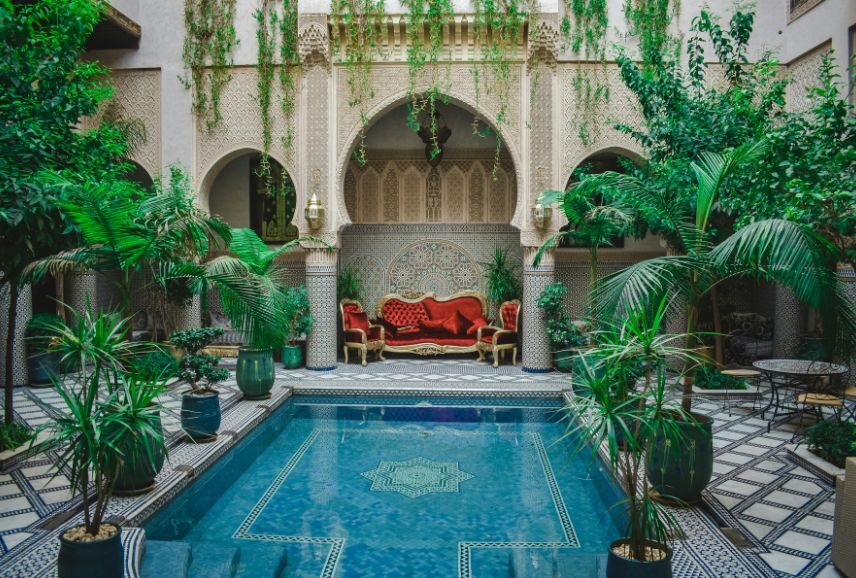
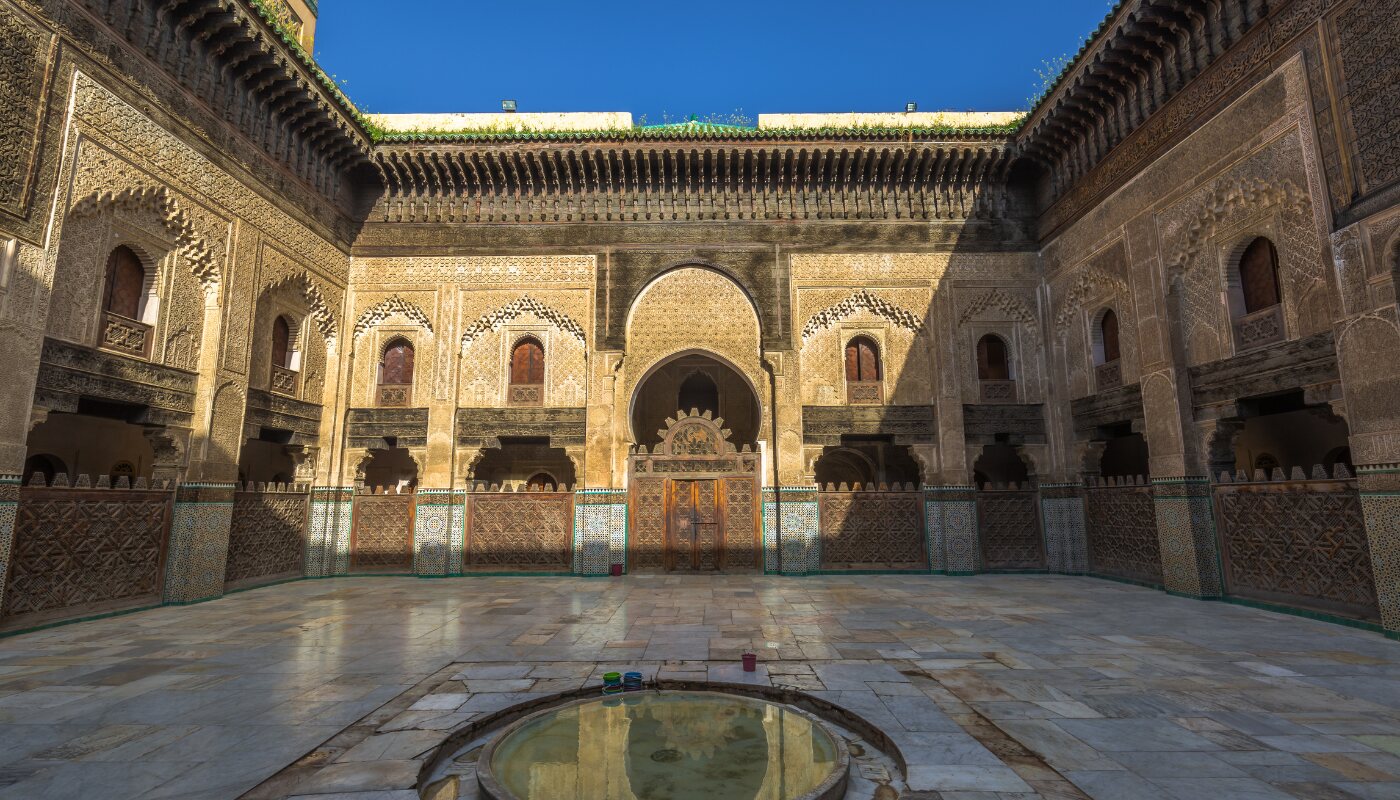
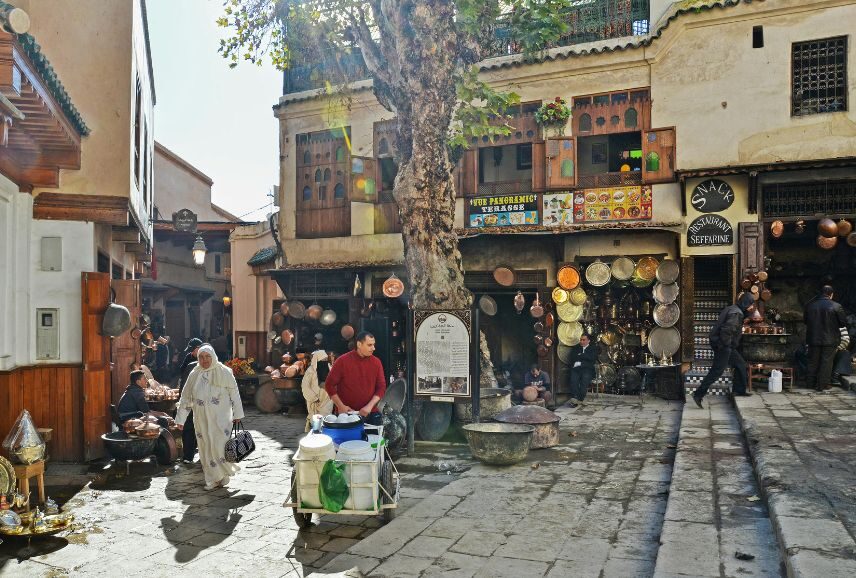
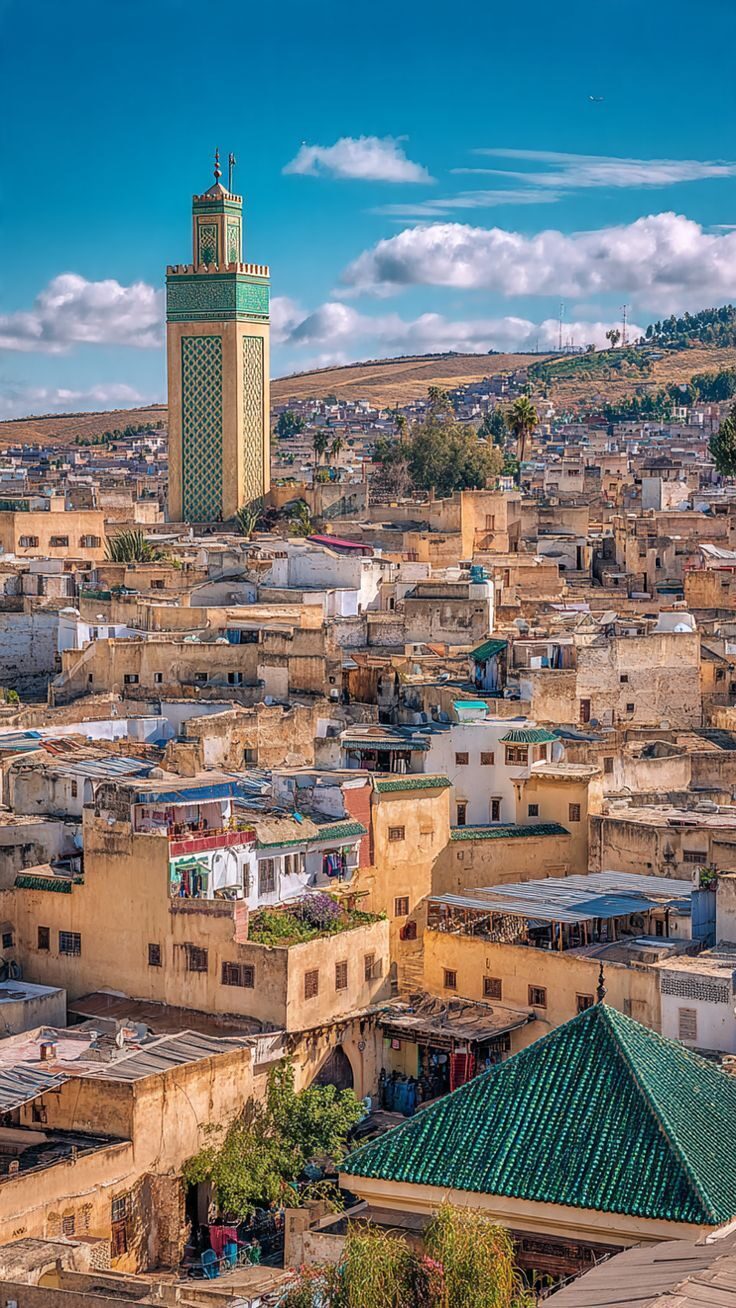
Along the way
Highlights
- Ait Benhaddou
- Erg Chebbi dunes
- Al-Qarawiyyin and the tanneries
- Volubilis and Bab Mansour
- Hassan Tower and Chellah
Comfort
- No marathon driving days
- Hand-picked riads along the route
- Stops whenever you ask for one
- Child seats and slower pacing on request