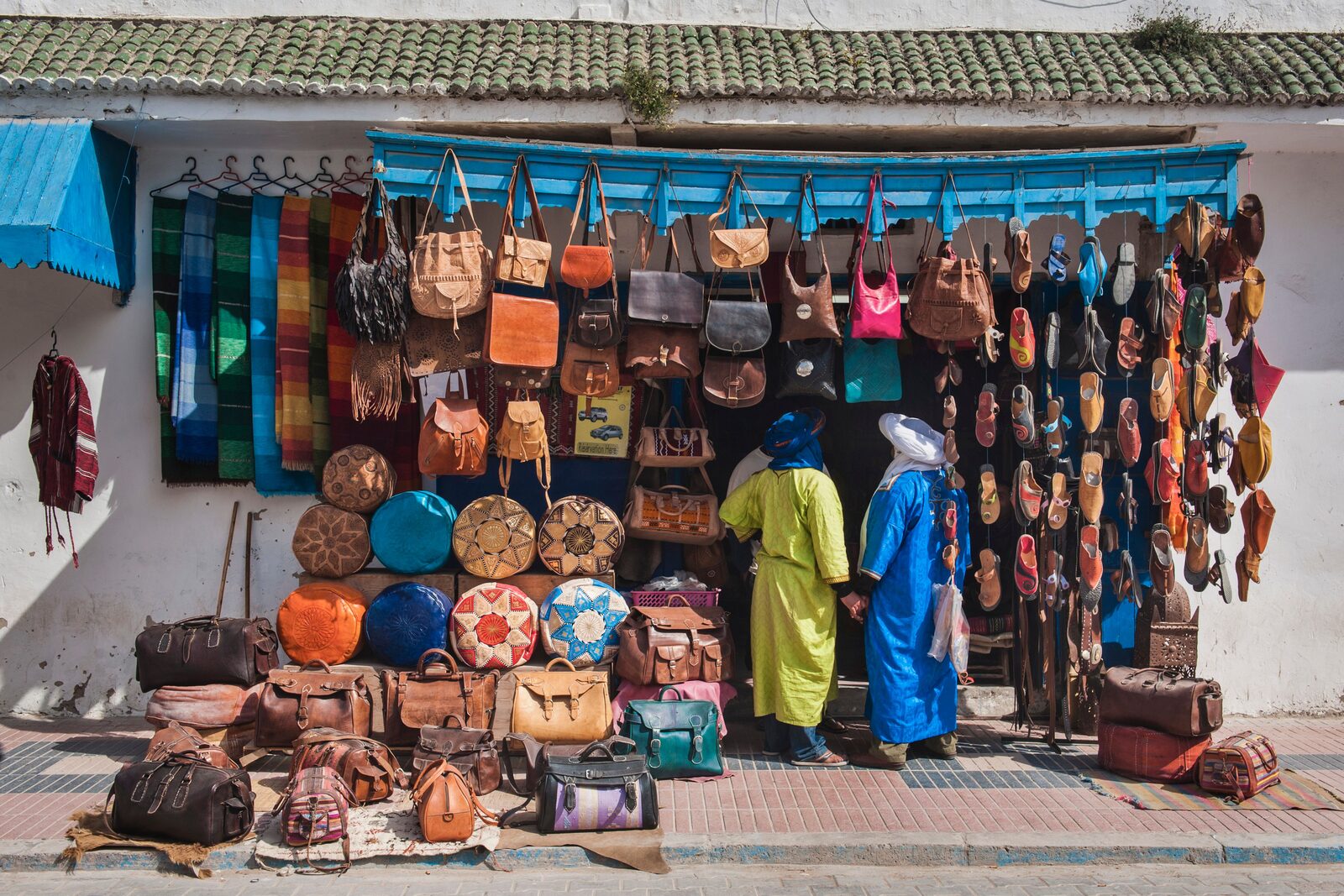
The experience
For travellers who would rather have sea air than sand. This circuit runs down the Atlantic through the Portuguese cistern at El Jadida and the ramparts of Essaouira, turns inland for Marrakech and a taste of the Atlas at Ait Benhaddou, then climbs north through the imperial cities to Fez and Rabat. It is the gentlest of our long circuits: short driving days, cooler weather most of the year, and good food the whole way.
- Essaouira and the Atlantic ramparts
- El Jadida's Portuguese cistern
- Marrakech and Ait Benhaddou
- Two nights in Fez
- Shorter driving days throughout
Full itinerary, day by day
Casablanca
We collect you at Mohammed V and keep the first day easy. The Hassan II Mosque is the one unmissable thing in the city: finished in 1993, built partly out over the Atlantic, with a 210 metre minaret and a retractable roof over the prayer hall. It is one of the very few working mosques in Morocco open to non-Muslim visitors, on timed guided tours, and we book you onto one.
After that, the Habous quarter, a 1920s district built by French architects as their idea of a Moroccan medina, which sounds dubious and is actually charming, with the best pastry shops in the city and a quiet book souk. We finish on the corniche at Ain Diab for the sunset and an easy first dinner. Night in Casablanca.
Casablanca → El Jadida → Oualidia
South down the coast road. El Jadida was Portuguese Mazagan from 1502 until 1769, and the walled town they left behind is UNESCO-listed. Its centrepiece is the Portuguese Cistern, an underground hall of stone vaults where a thin film of water on the floor mirrors the columns and the single shaft of daylight. Orson Welles filmed part of Othello in it, which tells you most of what you need to know about how it looks.
Oualidia is an hour further, a lagoon town sheltered behind a sandbar, with calm swimming, flamingos and spoonbills on the water in season, and oyster beds that supply much of the country. Lunch is oysters at one of the farms if you eat them. It is the quietest night of the whole circuit and most people are glad of it after two city days.
Oualidia → Safi → Essaouira
Safi is the working Atlantic: the largest sardine port in Morocco and the oldest pottery town in the country. On the Colline des Potiers the kilns have been firing for centuries and the workshops still throw, glaze and fire on site, which makes it a far better place to buy ceramics than any souk stall. The Portuguese sea fort below it, Dar el-Bahar, takes twenty minutes.
Then the coast road south through scrubland and argan to Essaouira, arriving in the late afternoon. The medina, UNESCO-listed in 2001, was laid out in the 1760s by a French engineer for Sultan Mohammed ben Abdallah, which is why it has straight streets and a grid, unlike every other Moroccan medina. Walk the Skala de la Ville with its row of brass cannons as the light goes.
Essaouira
A free day in the most relaxed town on the Moroccan coast. The trade winds blow here almost year round, which is why it is a kitesurfing capital and also why it stays cool in August when Marrakech is at 45 degrees. Bring a windbreaker even in summer.
The morning is for the port, where blue wooden sardine boats are still built and repaired by hand and the catch is grilled on the quay at lunchtime, and for the thuya woodworkers in the arcades under the ramparts, who inlay the burl with lemonwood and mother of pearl. Afternoon, the long beach south towards Diabat, horses and camels on the sand, and the ruins of Borj el-Berod half buried at the far end. If you are here in June, the Gnaoua festival takes over the whole town.
Essaouira → Marrakech
Inland through the argan belt. The trees are endemic to this corner of Morocco and nowhere else on earth, and the goats really do climb them for the fruit, though we will tell you honestly when a roadside group has been put there for the cameras. The women's cooperatives along this road press the oil by hand and are worth a stop, both for the product and because the cooperatives were one of the first serious rural employment schemes for women in the south.
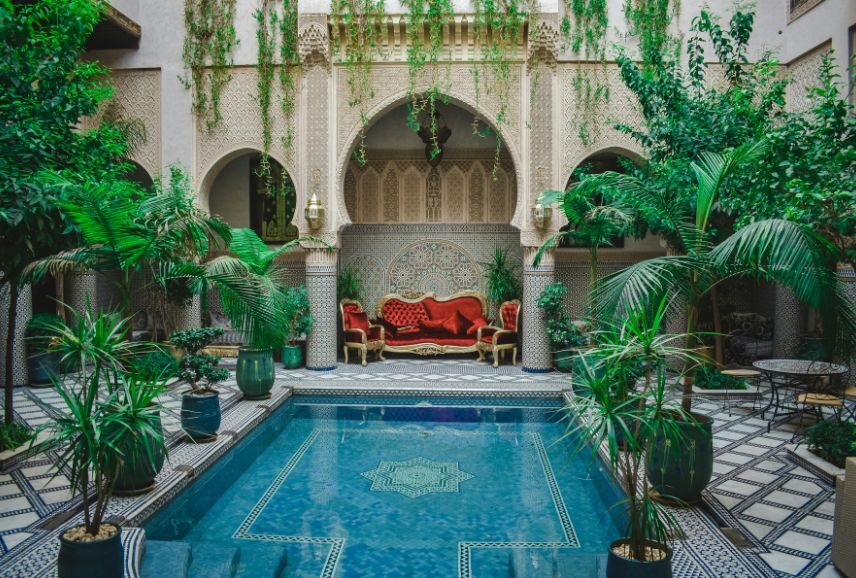
Marrakech is about three hours from the coast and the change is abrupt: from Atlantic wind to red walls and heat in a single morning. We arrive in time to settle into the riad before the evening, which is the right moment for a first walk into Jemaa el-Fna as the food stalls are being assembled.
Marrakech
A guided morning in the medina with a licensed local guide. The Bahia Palace was built in the 1860s and 1890s for a grand vizier and has the best painted cedar ceilings in the country. The Saadian Tombs were walled up by Moulay Ismail and only rediscovered in 1917, which is why the sixteenth-century stucco and carrara marble inside are so intact. The Koutoubia minaret, finished around 1199, is the template for both the Giralda in Seville and the Hassan Tower in Rabat.
The afternoon is unstructured on purpose. The Jardin Majorelle and the Yves Saint Laurent museum take about two hours together and need booking ahead in high season; Le Jardin Secret inside the medina is quieter and nearly as good. If you would rather shop, the souks north of Jemaa el-Fna are best approached around four, when the light comes through the slatted roofs.
Marrakech → Ait Benhaddou → Marrakech
A long day out and worth it, but we will say plainly that it is long: roughly four hours each way over the Tizi n'Tichka, the highest major pass in Morocco at 2,260 metres. We leave early, stop at the pass and at the mineral stalls, and are at the ksar before the coaches from Ouarzazate arrive.
Ait Benhaddou has been UNESCO-listed since 1987 and is the best surviving example of southern Moroccan earthen architecture: a fortified village rising in tiers above the Ounila river, built on the caravan road that ran from Marrakech to the Sahara. We cross the riverbed on foot and climb to the granary at the summit. Lunch on a terrace facing it, then back over the Atlas with the afternoon light on the peaks. If you would rather not do the return in one day, say so and we will put a night in Ouarzazate here instead.
Marrakech → Fez
The long transfer north, around 530 kilometres and close to six hours on the motorway through Beni Mellal and the phosphate plateau. It is the one frankly functional day on the circuit and we use it properly: an early start, a stop for lunch at Beni Mellal or the Bin el-Ouidane lake if you want the detour, and arrival in Fez with the evening still ahead.
If you would prefer to fly or take the train for this leg, we can arrange either and meet you at the other end with the same vehicle and driver. Say so when we are building the proposal rather than on the morning itself. Night in a riad inside Fez el-Bali, with dinner in a courtyard.
Fez → Rabat
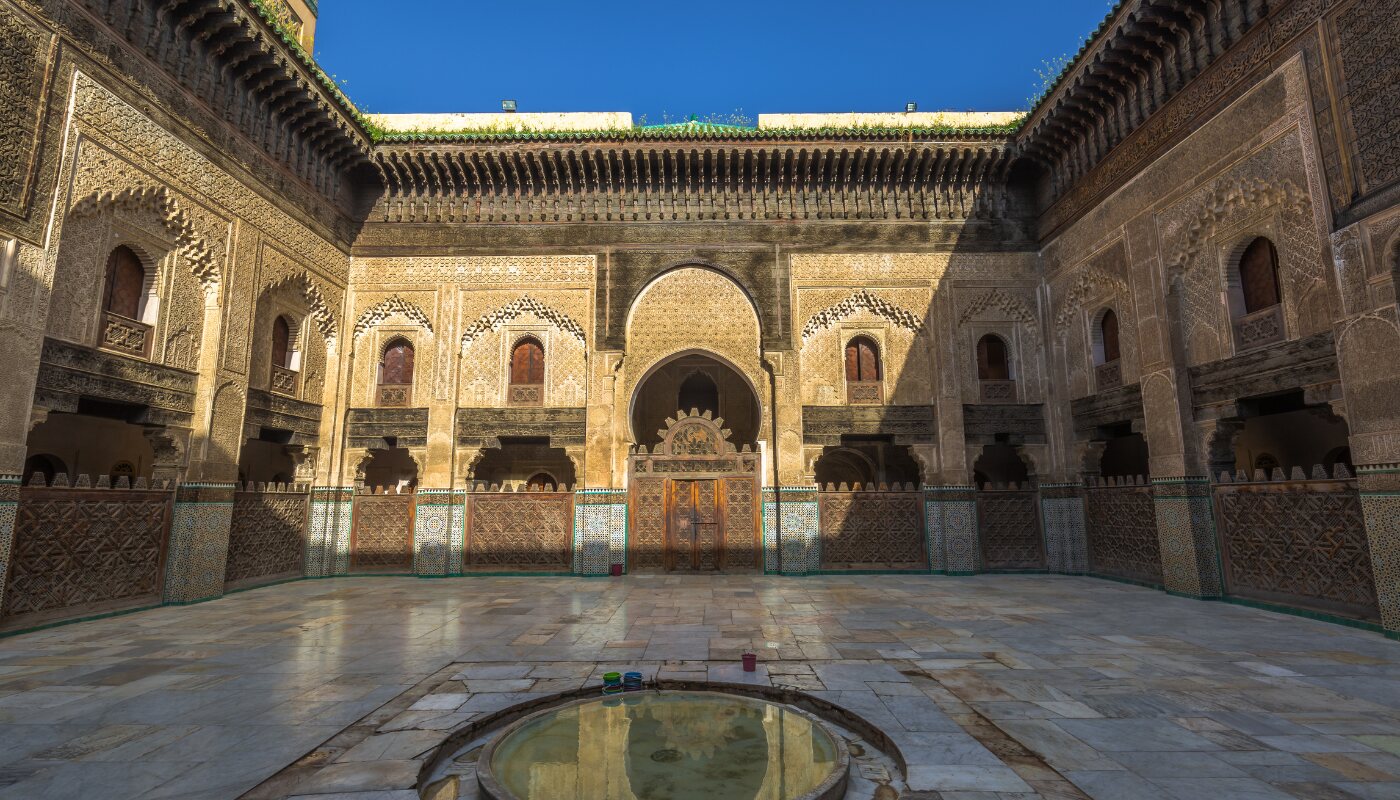
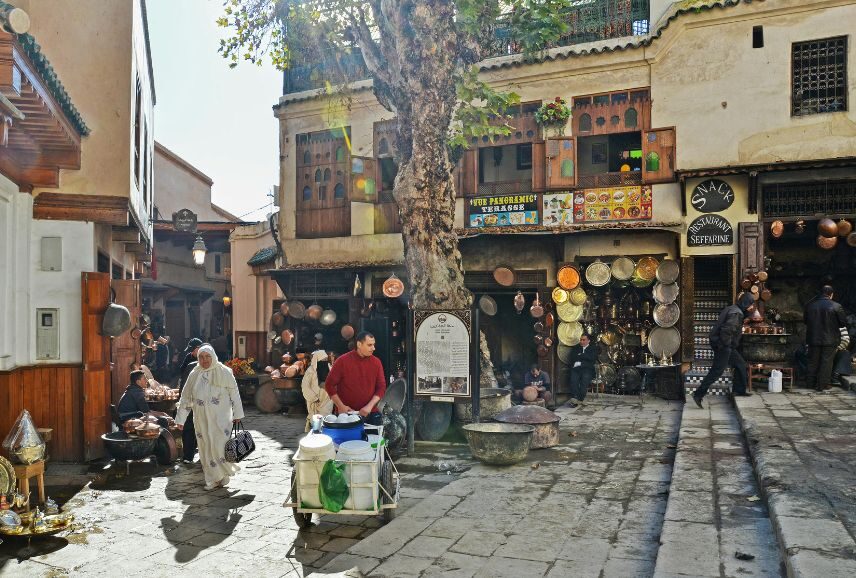
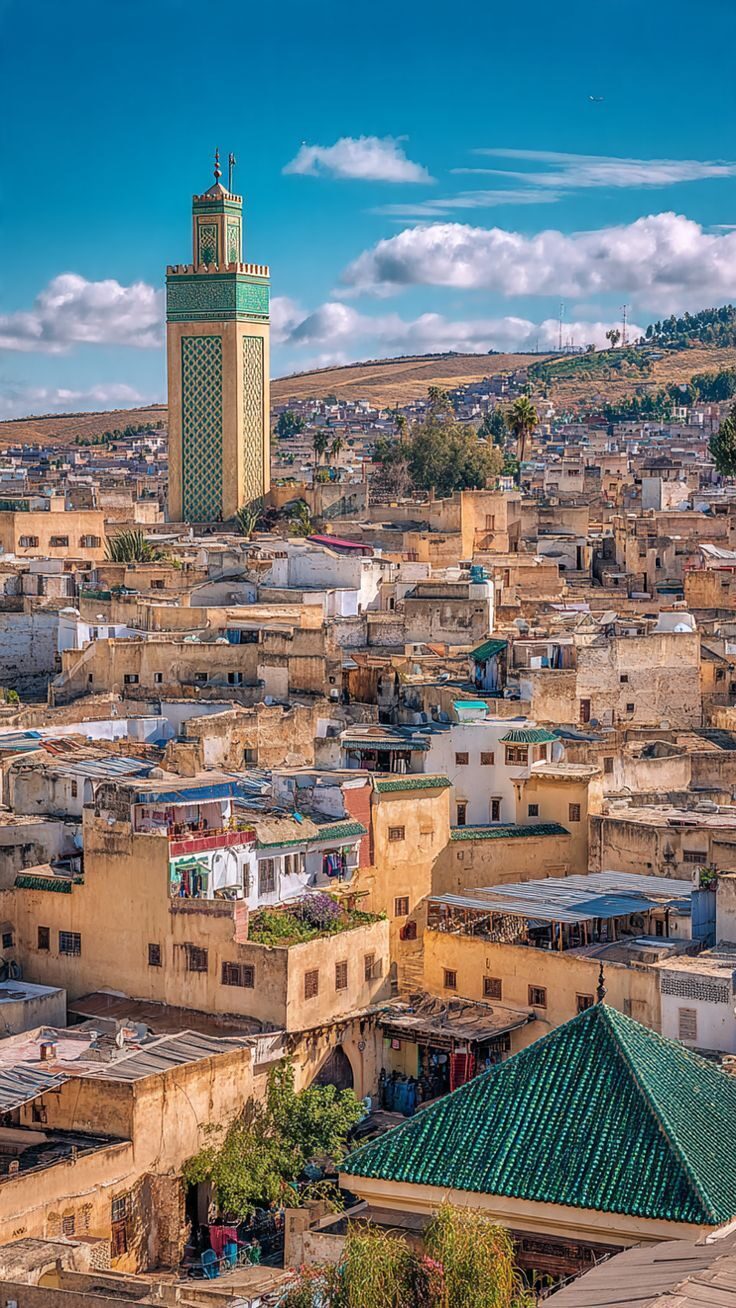
A guided morning in Fez el-Bali, the largest car-free urban area in the world: the Al-Qarawiyyin, founded in 859 and generally held to be the oldest continuously operating university anywhere; the Bou Inania madrasa; the Chouara tanneries from a terrace above the vats; and Place Seffarine where the brass beaters work in the open.
Then west to Rabat, about two and a half hours, for a gentle close to the trip. The Kasbah of the Udayas and its Andalusian garden take an hour, the Hassan Tower and the Mohammed V mausoleum another, and the Chellah necropolis is worth the last of the light if your flight is late. Drop-off at Rabat-Sale airport, the station, or on to Casablanca airport if that is where you fly from.
Inclusions & exclusions
✓ Included
- Private air-conditioned vehicle & driver
- Accommodation in riads, hotels & desert camp
- Breakfasts and dinners as per itinerary
- Camel trek and a night under the stars
- Pickup and drop-off at hotel or airport
✕ Not included
- Lunches and extra drinks
- Monument and museum entrance fees
- Licensed city guides where requested
- Tips and personal expenses
A glimpse of the road
Along the way
Highlights
- Hassan II Mosque, Casablanca
- El Jadida's Portuguese cistern
- Essaouira ramparts and port
- Ait Benhaddou and the Tichka
- Fez el-Bali and Rabat's kasbah
Comfort
- No marathon driving days
- Hand-picked riads along the route
- Stops whenever you ask for one
- Child seats and slower pacing on request