The experience
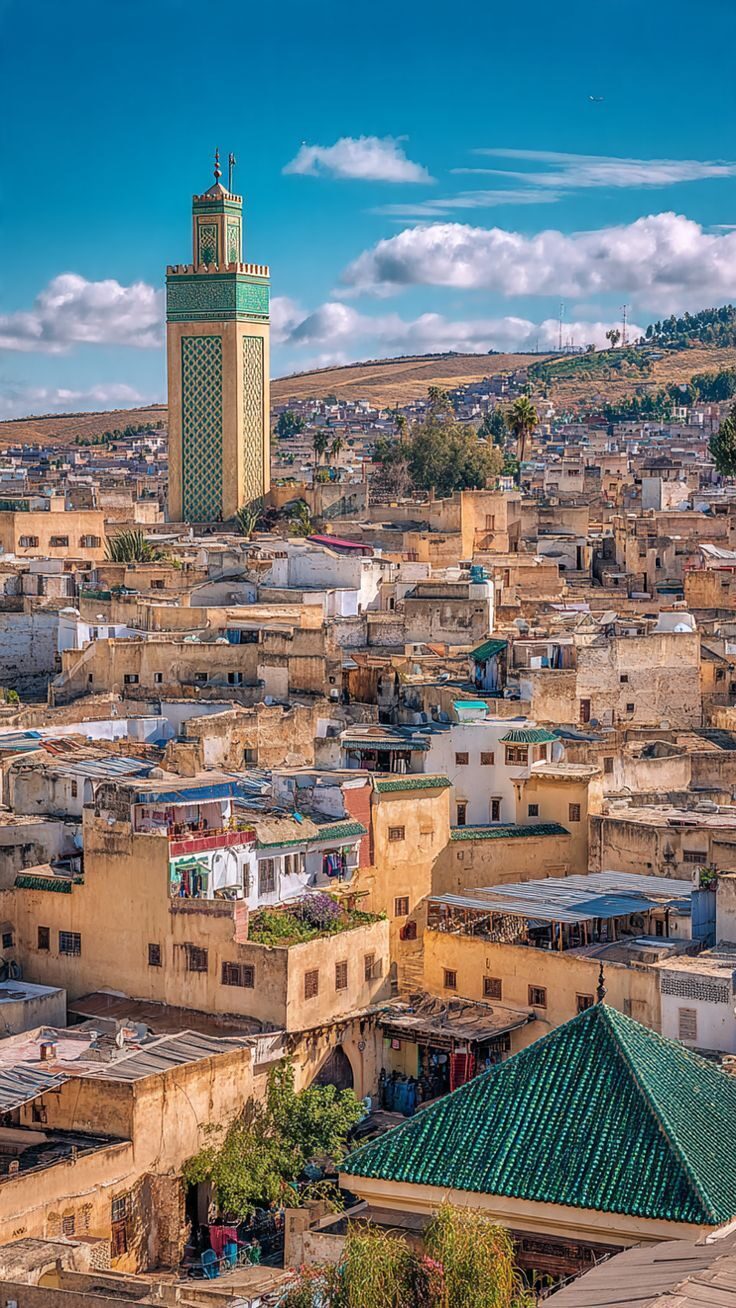
Most circuits treat Fez as a departure point and give it a morning. This one gives it two nights and a full guided day, because Fez el-Bali is the largest car-free urban area on earth and the reason many people come to Morocco in the first place. From there the route runs south to two nights at Erg Chebbi and west through the gorges to Marrakech, so you end where your onward flight is.
- Two nights in the Fez medina
- A full guided day in Fez el-Bali
- Two nights at Erg Chebbi
- Todra, Dades and the kasbah road
- Ends in Marrakech, no backtracking
Full itinerary, day by day
Arrival in Fez
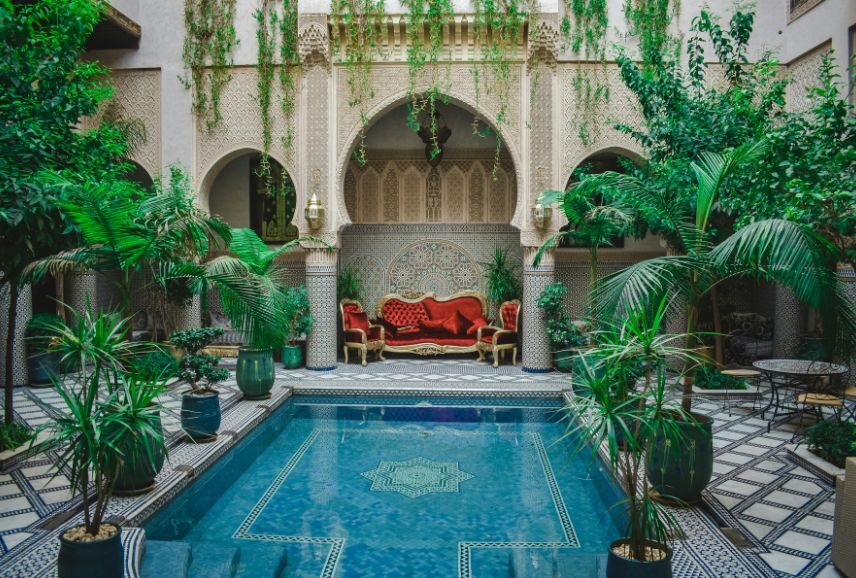
We meet your flight at Fez-Saiss and take you straight to a riad inside the medina walls, which is the only sensible place to stay here: the lanes are too narrow for cars, and waking up inside them is the point.
If you land early enough we walk out for an hour before dinner, far enough to orient you without trying to cover anything, usually up to the Merinid tombs on the northern hill where the entire medina lies in its bowl below with smoke rising off the tanneries. Dinner in a courtyard, and an early night before the real day.
Fez el-Bali, guided day
A full day on foot with a guide born inside the walls. This is not a luxury in Fez but a practical necessity: there are something like nine thousand lanes and the plan was deliberately confusing, built to be defended rather than navigated.
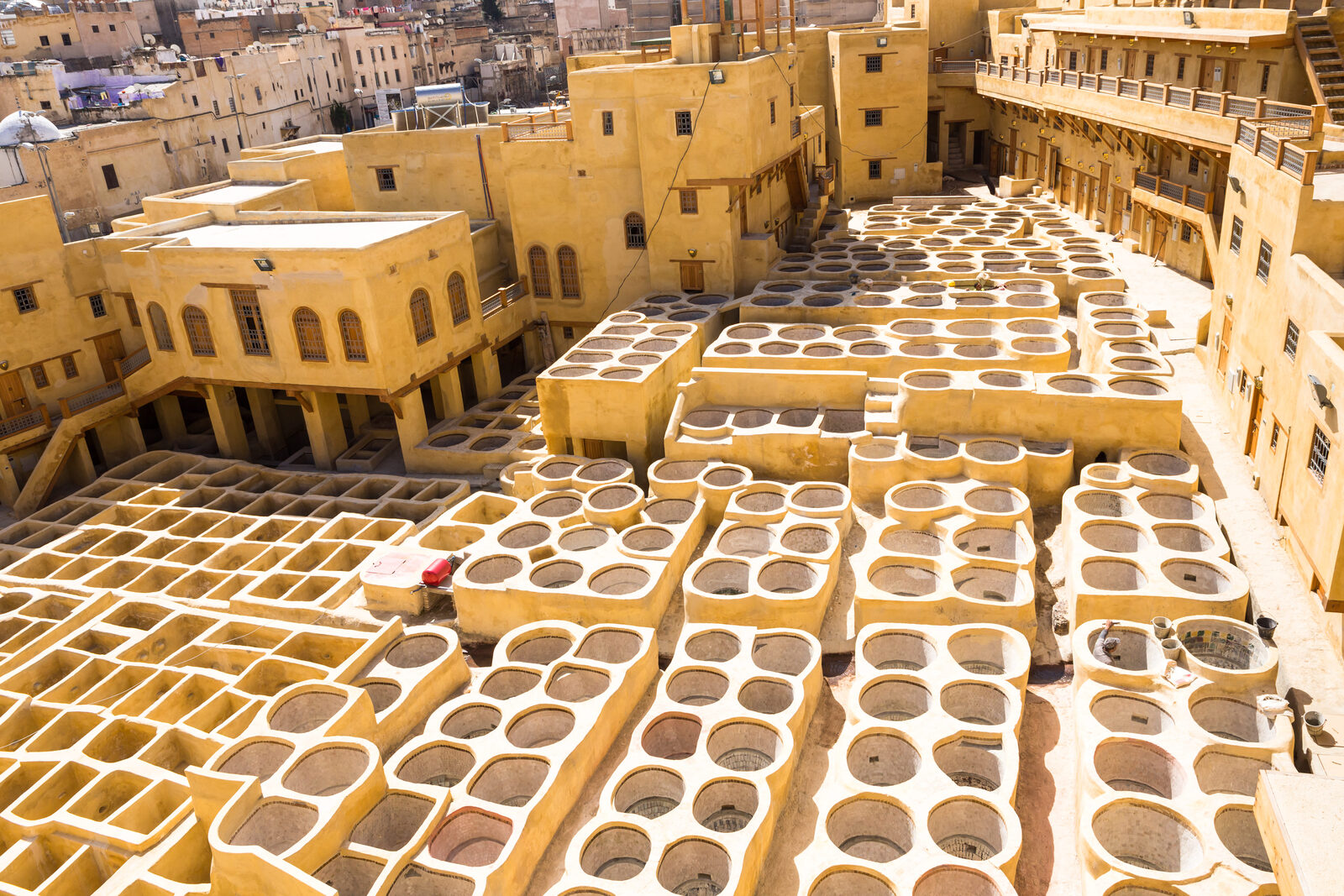
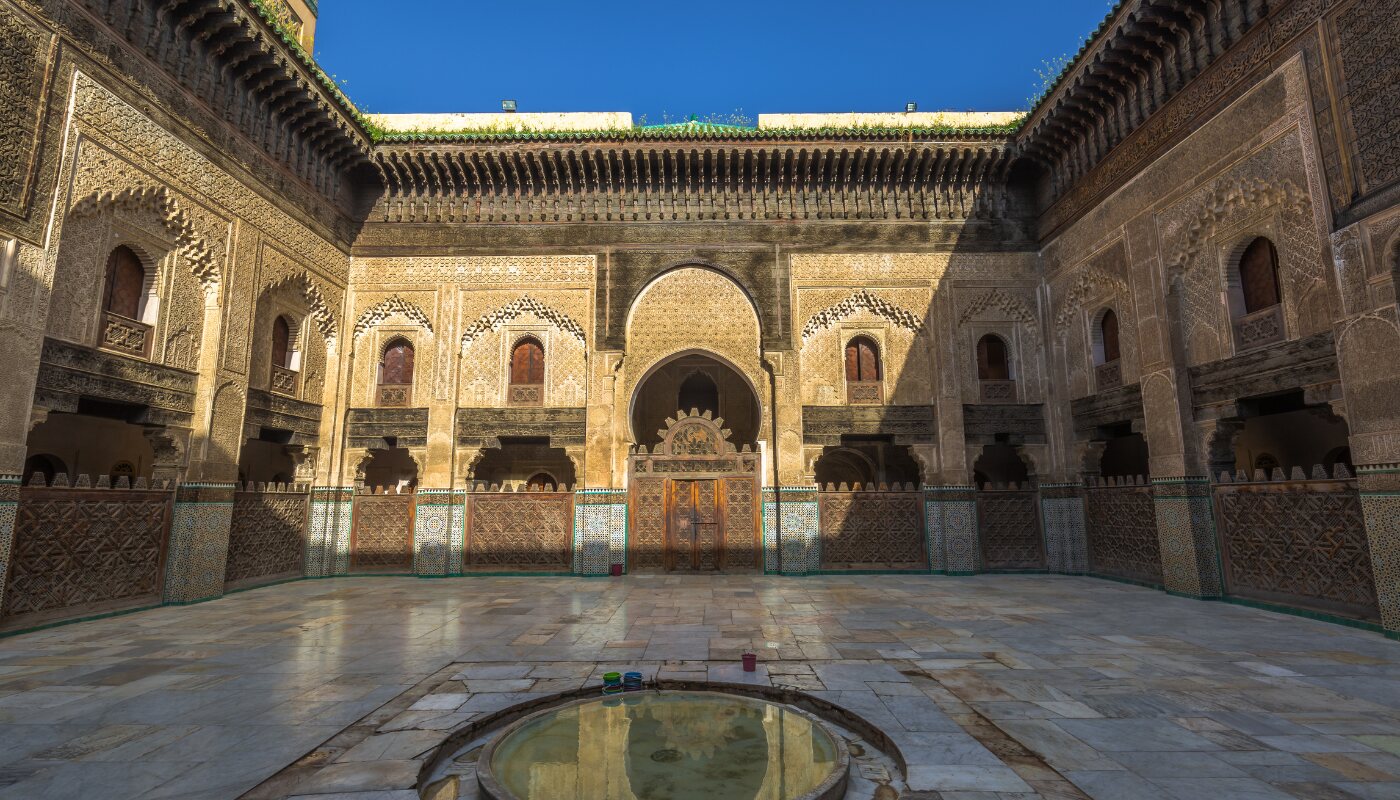
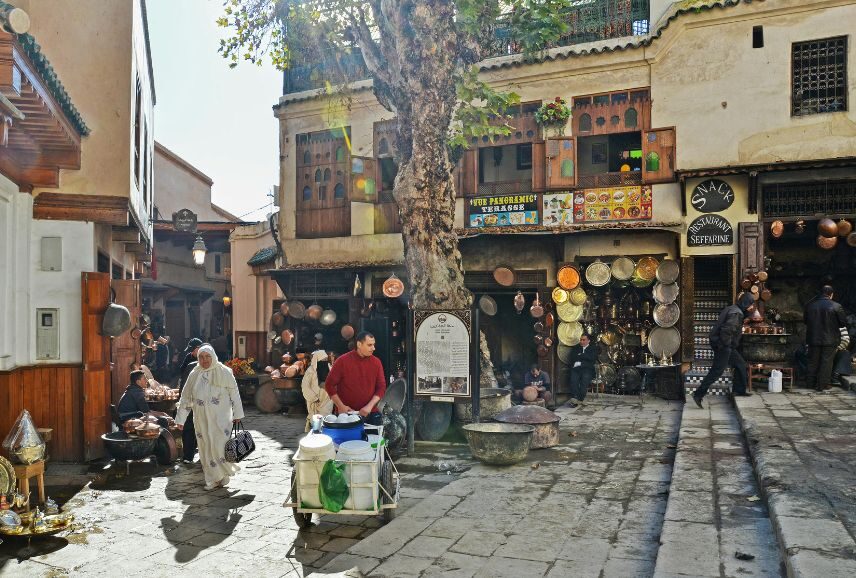
We take the Al-Qarawiyyin, founded in 859 by Fatima al-Fihri and generally held to be the oldest continuously operating university in the world; the fourteenth-century Bou Inania and Al-Attarine madrasas for their carved cedar, stucco and zellige; the Chouara tanneries from a terrace above the dye pits; Place Seffarine, where the brass beaters work in the open and the noise is the oldest sound in the city; and the Nejjarine fondouk. Lunch in a riad courtyard, afternoon paced to you.
Fez → Ifrane → Midelt → Merzouga
South and up into the Middle Atlas. Ifrane within the hour at 1,665 metres, then the cedar forest above Azrou, the largest stand in North Africa, with Barbary macaques along the road and trees three centuries old. Lunch at Midelt on the high plateau.
The afternoon is the better half: the Tizi n'Talghomt, the Ziz gorges cut into red rock above the river, and the long palm belt of the Ziz Valley with its earthen ksour. We reach Merzouga in time to swap to an overnight bag and ride camels into Erg Chebbi for sunset, with dinner and drumming at the camp.
Merzouga, full day
Sunrise from the dune above camp, then back to the auberge for breakfast and a shower. The second desert day is what turns a dune visit into an actual understanding of the place.
Khamlia first, the Gnawa village founded by descendants of people brought north across the Sahara, where the music is liturgy rather than performance and lunch is madfouna baked in an underground oven. Then the black hammada, nomad families who move with the grazing, the old kohl workings, and Dayet Srji, the seasonal lake that fills after rain and brings flamingos in spring. Second night at camp or in a kasbah on the edge of the erg.
Merzouga → Rissani → Todra → Dades
Rissani on the way out, the old caravan town beside the ruins of Sijilmassa and still the regional market; on souk days the donkey park alone is worth the stop, and the date stalls are the best in the south.
Todra Gorge fills the afternoon: limestone walls 300 metres high narrowing to roughly ten metres, a spring running out along the floor, and the Tinghir palmery stretching 30 kilometres down the valley below. We walk the level stretch. Then into the Dades, finishing on the switchbacks above Tissdrine with the night in a hotel set against the gorge wall.
Dades → Rose Valley → Skoura → Ait Benhaddou
The Road of a Thousand Kasbahs west. Kelaat M'Gouna and the Valley of Roses, where Damask roses brought along the caravan routes centuries ago are harvested each May and distilled, then Skoura, a palm oasis of around 30,000 trees with Kasbah Amerhidil standing in the middle of it.
Ouarzazate follows, with the Taourirt Kasbah and the Atlas studios if you want them. We reach Ait Benhaddou late in the day on purpose: the ksar turns gold in the last hour and the coaches have gone. Cross the riverbed on foot, climb through the tiers of earthen houses to the granary at the top, and sleep facing it.
Ait Benhaddou → Telouet → Marrakech
The old caravan road over the Atlas rather than the fast one, by way of Telouet and the ruined Glaoui palace, seat of the family who held the southern passes until 1956. The painted ceilings and zellige rooms are half collapsed and worth every minute of the detour.
The valley road rejoins the Tichka at 2,260 metres and drops into the Haouz plain, reaching Marrakech in the afternoon. Settle in, then walk into Jemaa el-Fna at dusk as the food stalls go up, which is the right first impression before tomorrow's guided morning.
Marrakech → departure
A guided morning in the medina: the Bahia Palace and its painted cedar ceilings, the Saadian Tombs sealed for two centuries and reopened in 1917, the Koutoubia, and the Ben Youssef Medersa if it is open, which has the finest courtyard in the country.
The rest of the day is yours, usually split between the souks around Rahba Kedima and the Jardin Majorelle with the Yves Saint Laurent museum beside it. Transfer to Marrakech-Menara or your riad whenever you need. If you are flying out of Marrakech, keep the morning free rather than booking an early departure.
Inclusions & exclusions
✓ Included
- Private air-conditioned vehicle & driver
- Accommodation in riads, hotels & desert camp
- Breakfasts and dinners as per itinerary
- Camel trek and a night under the stars
- Pickup and drop-off at hotel or airport
✕ Not included
- Lunches and extra drinks
- Monument and museum entrance fees
- Licensed city guides where requested
- Tips and personal expenses
A glimpse of the road
Along the way
Highlights
- Al-Qarawiyyin and the madrasas
- Chouara tanneries and Place Seffarine
- Ziz Valley and Erg Chebbi
- Todra Gorge and Dades kasbahs
- Ait Benhaddou and Telouet
Comfort
- No marathon driving days
- Hand-picked riads along the route
- Stops whenever you ask for one
- Child seats and slower pacing on request