The experience
Most short circuits from Casablanca make you choose between the Rif and the Sahara. Seven days is the first length where you can have both without rushing either. We go north first to Chefchaouen, come back down through Volubilis and Meknes into Fez for a guided day, then south over the Middle Atlas to Erg Chebbi, out through the gorges and the kasbah road, and finish in Marrakech. One way throughout, so nothing is driven twice.
- Chefchaouen evening and morning
- Volubilis mosaics on the way to Fez
- Guided day in Fez el-Bali
- Camel trek and camp at Erg Chebbi
- Todra, Dades, Ait Benhaddou and the Tichka
Full itinerary, day by day
Casablanca → Rabat → Chefchaouen
Hassan II Mosque in the morning, then north. Rabat gets the Udayas and the Hassan Tower, and after that the motorway runs up through the Gharb plain and the cork oak forest before turning into the hills at Ouezzane.
The last hour is a Rif mountain road and it is a good one. Chefchaouen sits on a shoulder of the Jebel el Kelaa, white below and blue above, and we aim to be checked in with the late afternoon still to spend. The medina empties out when the coaches leave, and the square under the kasbah walls is the right place to be at that hour.
Chefchaouen → Volubilis → Meknes → Fez
An early walk through the upper lanes before the town wakes, up to the Spanish Mosque on the ridge for the view back down over the roofs, and then the kasbah garden and the ras el maa where the mountain stream comes out under the walls.
We leave mid-morning and come south through Ouezzane into the olive country. Volubilis in the early afternoon — the Roman town with its mosaics still in situ, the Capitol and the triumphal arch standing over the plain, and Moulay Idriss white on its twin hills above. Meknes after that for Bab Mansour and the granaries, and into Fez in the evening.
Fez, guided day on foot
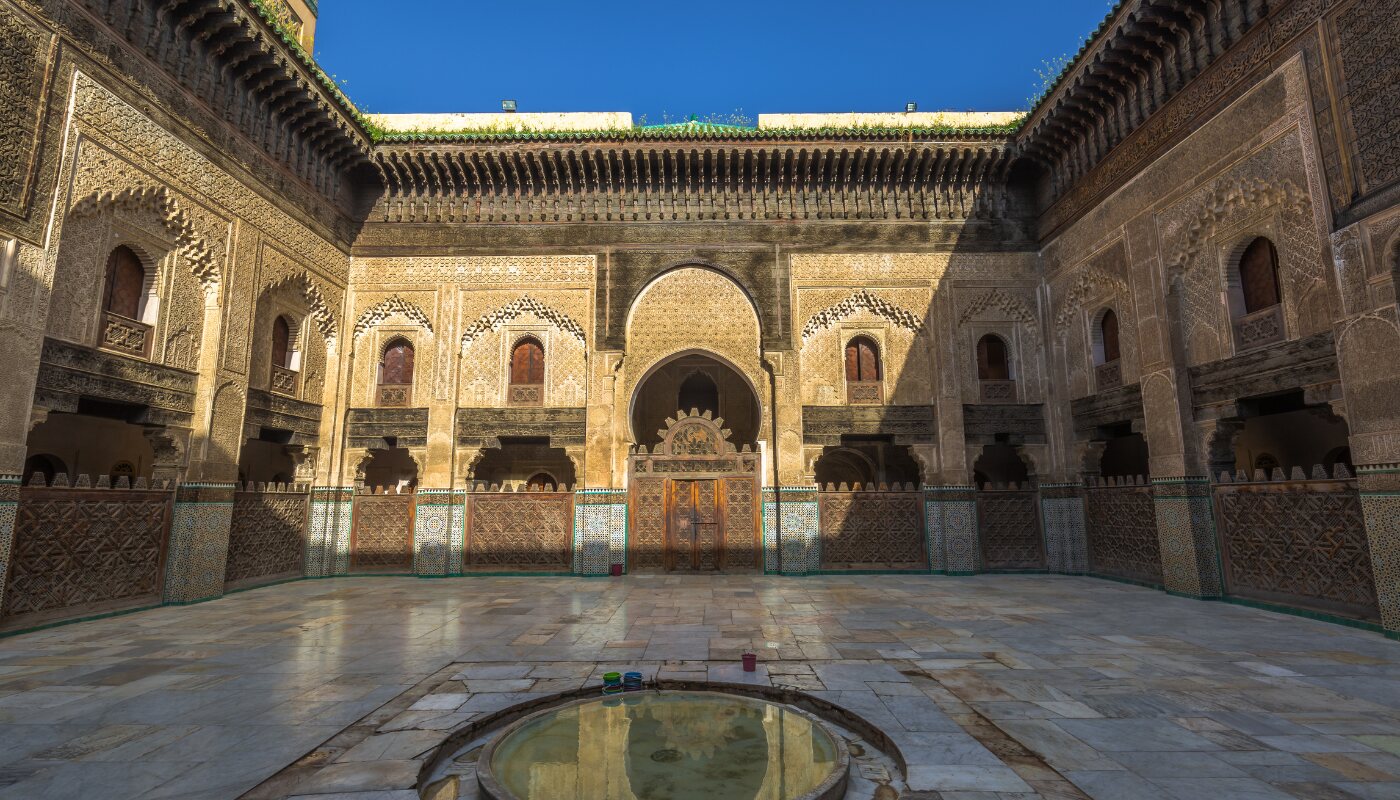
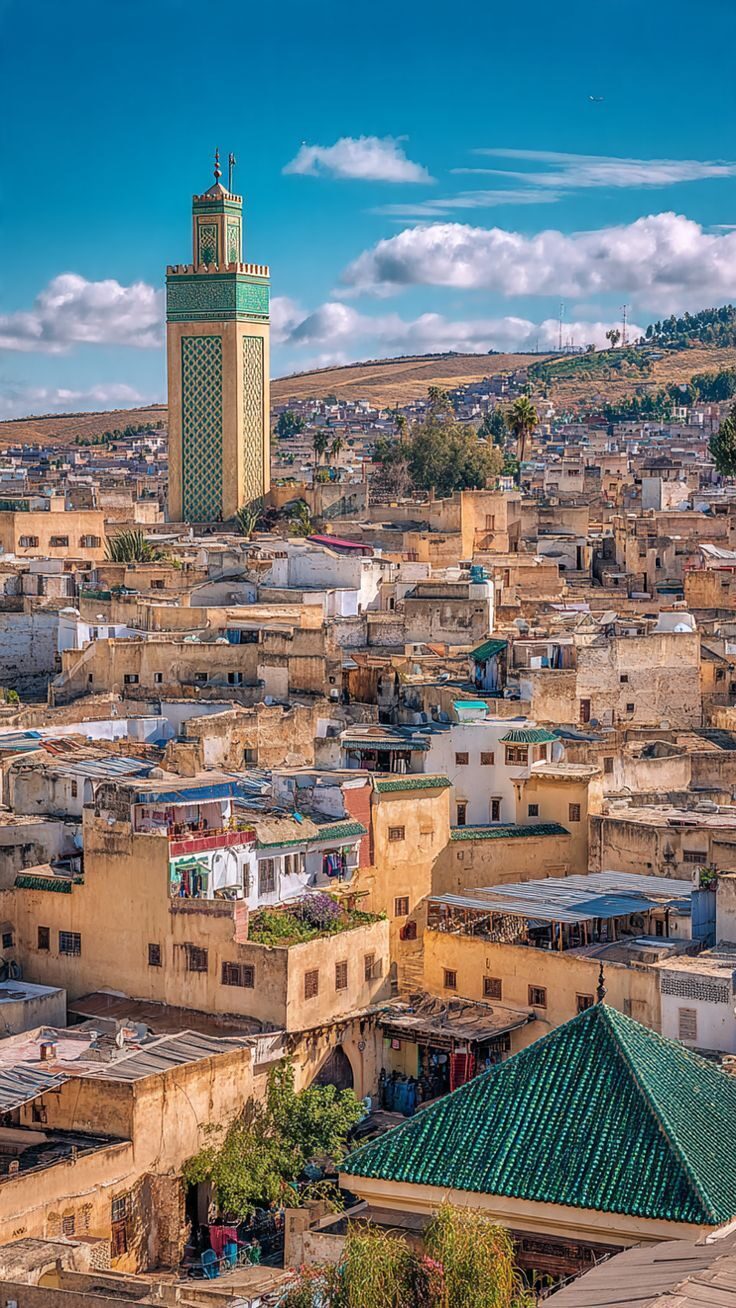
A full day inside Fez el-Bali with a licensed guide, starting at Bab Boujloud and working downhill because that is how the medina is built. The Bou Inania and Attarine madrasas for the carved cedar and zellij, Al-Qarawiyyin, founded in 859 and still a working mosque and university, and the Nejjarine fondouk.
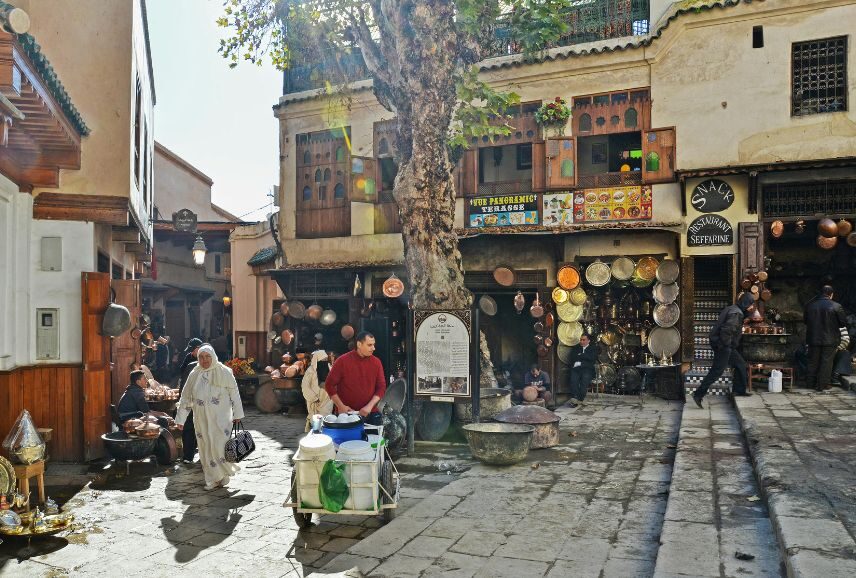
The afternoon is craft and trade: the Chouara tanneries with their vats of lime and pigment, the coppersmiths at Seffarine, the ceramic workshops outside the walls where the zellij tiles are still cut by hand with a hammer rather than a saw. Sunset from the Merinid tombs above the city.
Fez → Ifrane → Midelt → Erfoud → Merzouga
The crossing. Up through Ifrane and the cedar forest at Azrou where the Barbary macaques are, out onto the plateau towards Midelt, and over the Tizi n'Talghemt into the pre-Sahara. The vegetation thins, the rock turns red, and the ksour start appearing against the cliffs.
The Ziz Valley carries us south through its palm belt, Erfoud supplies the fossil workshops and lunch, and Merzouga is reached in the late afternoon. Camels at sunset, ninety minutes into Erg Chebbi, a night at a Berber camp between the dunes with dinner cooked in the sand and no light pollution for a hundred kilometres.
Merzouga → Rissani → Tinghir → Todra → Dades
Sunrise over the erg, which is worth the alarm — the dunes turn apricot then rust in about a quarter of an hour. Back by camel for breakfast and a shower, then west with a stop at Rissani, where the market is the real southern thing: dates, donkeys, blacksmiths, and the ruins of Sijilmassa in the palms outside town.
Tinghir sits above one of the largest palmeries in the south and we look down over it before going up into Todra Gorge, where the cliffs reach 300 metres and close to roughly ten metres apart at the narrowest point. We walk it. Then the Dades road, the Tissdrine switchbacks in the late light, and a night in the gorge.
Dades → Rose Valley → Skoura → Ouarzazate → Ait Benhaddou → Marrakech
Down the Valley of a Thousand Kasbahs with a detour through the Rose Valley at Kelaat M'Gouna, where the damask roses are harvested every May and distilled locally — the distilleries sell the water all year. Skoura's palmery next, and Kasbah Amridil, which is as complete a mud-brick fortress as survives anywhere.
Ouarzazate for lunch and the Taourirt kasbah, then Ait Benhaddou, where we cross the river and climb through the ksar to the granary on the summit. The Tizi n'Tichka in the afternoon light, 2,260 metres over the High Atlas, and down into Marrakech for the evening.
Marrakech guided day → departure
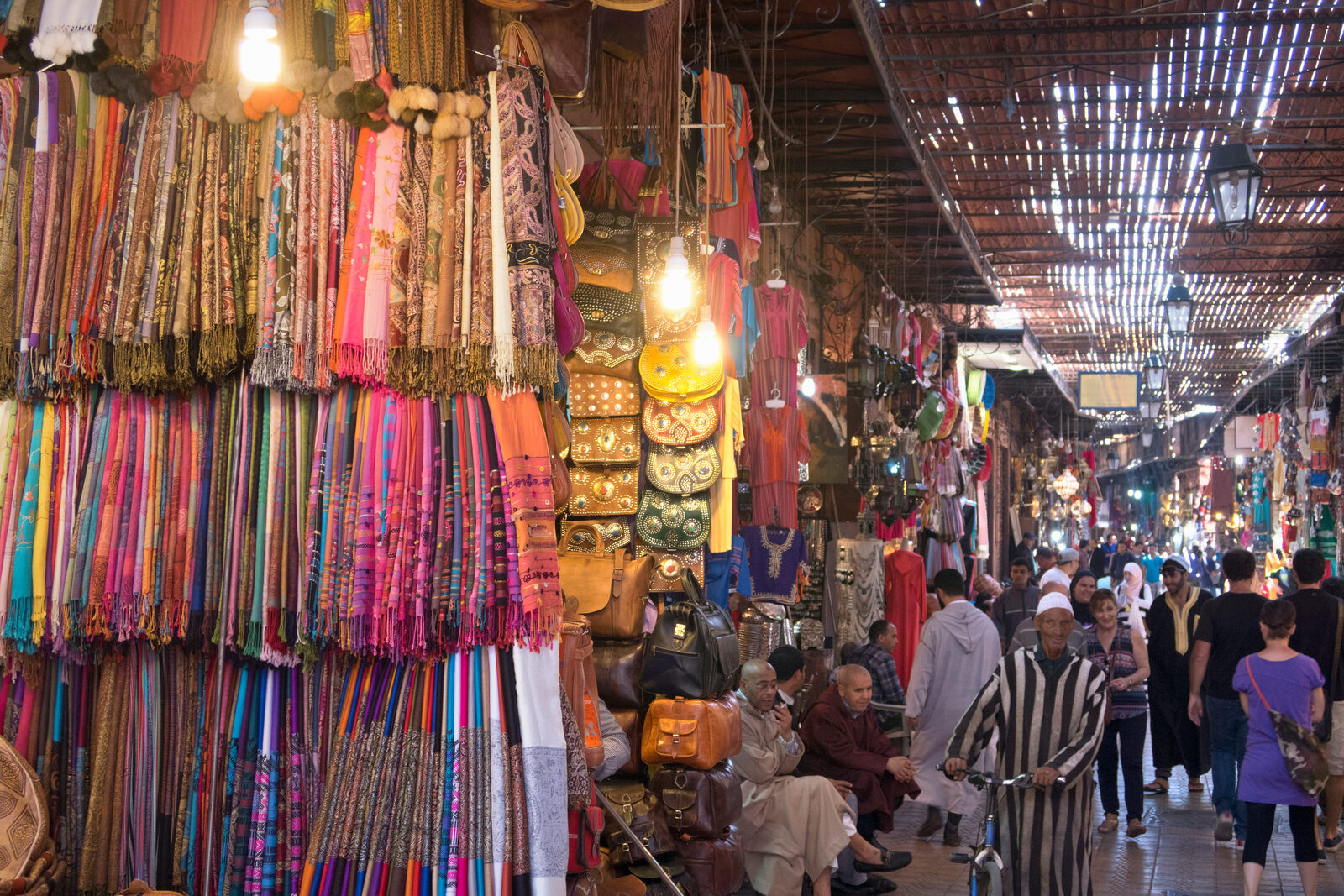
The medina with a local guide: Koutoubia, Bahia Palace, Saadian Tombs, the Mellah, and the souks walked by trade rather than at random. The Maison de la Photographie has a roof terrace that is the best quiet lunch in the medina and we usually finish there.
The afternoon is free — a hammam, the Majorelle garden, or an hour doing nothing on a roof above the square — and then we take you to Marrakech Menara airport. If you need to fly from Casablanca we drive you up instead, which takes a little under three hours on the motorway.
Inclusions & exclusions
✓ Included
- Private air-conditioned vehicle & driver
- Accommodation in riads, hotels & desert camp
- Breakfasts and dinners as per itinerary
- Camel trek and a night under the stars
- Pickup and drop-off at hotel or airport
✕ Not included
- Lunches and extra drinks
- Monument and museum entrance fees
- Licensed city guides where requested
- Tips and personal expenses
A glimpse of the road
Along the way
Highlights
- Chefchaouen blue medina
- Volubilis
- Al-Qarawiyyin and the tanneries
- Erg Chebbi and the Dades valley
Comfort
- No marathon driving days
- Hand-picked riads along the route
- Stops whenever you ask for one
- Child seats and slower pacing on request