The experience
This is our five-day Fez to Marrakech crossing with the two extra days added where they actually change the trip: a second night at Erg Chebbi, so the desert gets a full day rather than a sunset and a sunrise, and a guided morning in Marrakech at the end instead of a taxi to the airport. It stays one-way, which is the whole point. You fly into Fez, you fly out of Marrakech, and you never drive the same road twice.
- One-way, no road repeated
- Two nights at Erg Chebbi
- Khamlia, nomads and the black desert
- Todra Gorge and the Dades kasbahs
- Guided morning in Marrakech
Full itinerary, day by day
Fez → Ifrane → Azrou → Midelt
A mid-morning departure rather than a dawn one, because six days means the route has room to breathe. Ifrane comes within the hour, the hill station at 1,665 metres whose pitched roofs and chalets look imported from the Jura, then the cedar forest above Azrou, the largest stand in North Africa, where Barbary macaques work the roadside.
Beyond the trees the road climbs onto the high plateau between the Middle and High Atlas, open grazing country dotted with nomad tents. Midelt arrives in the late afternoon at around 1,500 metres, with time to walk the souk before dinner. It is an apple and mining town rather than a sight, and it is on the route so that tomorrow reaches the dunes unhurried.
Midelt → Ziz Valley → Merzouga
The Tizi n'Talghomt first, then the drop through the Ziz gorges where the road is cut into red rock directly above the river. Below them the Ziz Valley opens into a belt of date palms running tens of kilometres, with fortified ksour of packed earth set back against the cliffs. We stop at the panorama above the palmery, and again at Erfoud, where workshops cut and polish 400-million-year-old orthoceras out of black marble.
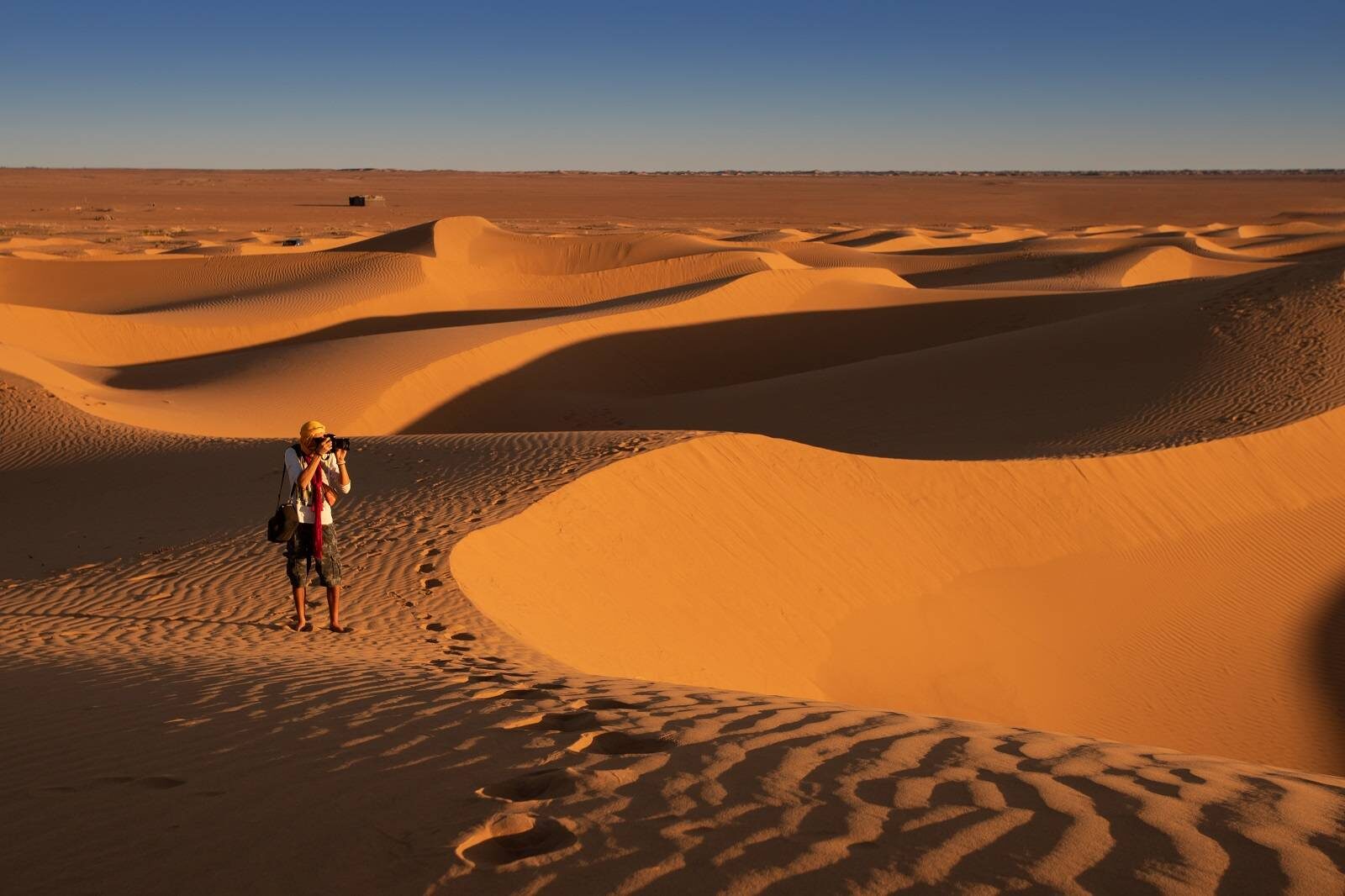
You reach the auberge at Merzouga mid-afternoon, leave the main luggage and take an overnight bag onto the camels. The trek into Erg Chebbi runs about ninety minutes and is timed to put you high on a ridge at sunset, when the sand turns from apricot to rust in about a quarter of an hour. Dinner is tagine at camp with bread baked in the sand, and the drums usually follow.
Merzouga, full day
This is the day the six-day version buys you. Sunrise from the dune above camp first, then camels back for breakfast and a hot shower, and the rest of the day belongs to the desert rather than the road.
We take Khamlia, the Gnawa village founded by descendants of people brought north across the Sahara, where the music is ritual rather than performance and lunch is madfouna from an underground oven; the black hammada that surprises everyone expecting sand throughout; nomad families who still move with the grazing and will put a kettle on; and Dayet Srji, the seasonal lake that fills after rain and draws flamingos in spring. Second night at the camp or in a kasbah on the edge of the erg.
Merzouga → Rissani → Todra → Dades
West out of the sand with a stop at Rissani, the old caravan capital beside the ruins of Sijilmassa and still the regional market town, where the donkey park on souk days is a sight in itself and the date stalls are the best in the south.
Todra Gorge is the afternoon: a limestone cleft where the walls stand 300 metres and pinch to roughly ten metres apart, with a spring running out along the floor towards the Tinghir palmery below. We walk the level stretch rather than drive through it. Then the kasbah road into the Dades, finishing on the switchbacks above Tissdrine, with the night in a hotel built into the gorge wall.
Dades → Skoura → Ouarzazate → Ait Benhaddou
The Road of a Thousand Kasbahs, taken slowly. Kelaat M'Gouna and the Valley of Roses come first, where Damask roses are picked through May and distilled into rose water, then the Skoura oasis and Kasbah Amerhidil, about as complete an earthen fortress as survives anywhere in Morocco.
Ouarzazate follows, with the Taourirt Kasbah and the Atlas film studios if studios interest you. We reach Ait Benhaddou deliberately late, because the ksar turns gold in the last hour and most of the coaches have left by then. We cross the riverbed on foot and climb through the earthen houses to the granary at the summit. Night facing the ksar.
Ait Benhaddou → Telouet → Marrakech
The old road over the Atlas rather than the fast one, by way of Telouet and the ruined palace of the Glaoui, the family who controlled the southern passes until 1956. Its painted ceilings and zellige rooms are half collapsed and entirely worth the detour, and the valley road beyond rejoins the Tichka at 2,260 metres.
Marrakech comes by early afternoon, which leaves time for a guided walk through the medina: the Bahia Palace, the Saadian Tombs, the Koutoubia and the souks around Rahba Kedima. Finish at Jemaa el-Fna as the food stalls go up and the square fills. Drop-off at your riad or the airport whenever you need.
Inclusions & exclusions
✓ Included
- Private air-conditioned vehicle & driver
- Accommodation in riads, hotels & desert camp
- Breakfasts and dinners as per itinerary
- Camel trek and a night under the stars
- Pickup and drop-off at hotel or airport
✕ Not included
- Lunches and extra drinks
- Monument and museum entrance fees
- Licensed city guides where requested
- Tips and personal expenses
A glimpse of the road
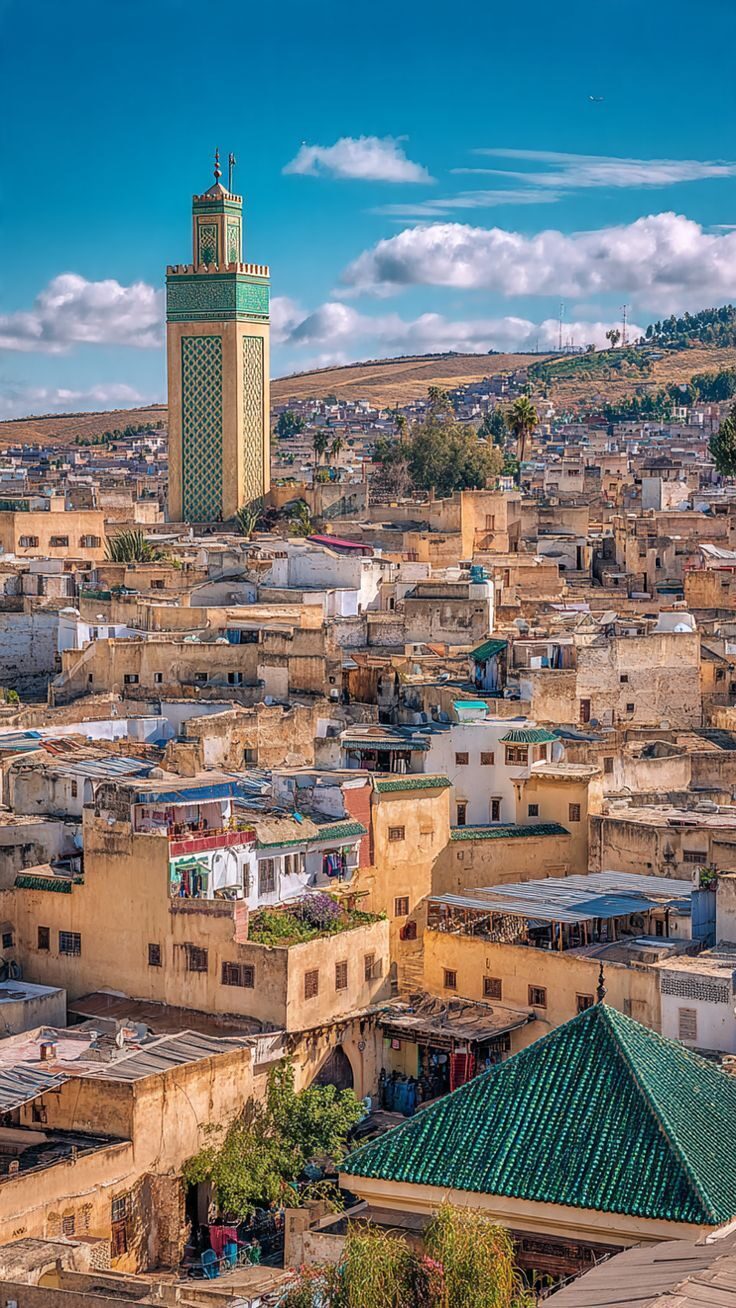
Along the way
Highlights
- Cedar forest and Barbary macaques
- Ziz Valley palm belt
- Erg Chebbi at sunset and sunrise
- Todra Gorge and Dades kasbahs
- Ait Benhaddou and the Telouet road
Comfort
- No marathon driving days
- Hand-picked riads along the route
- Stops whenever you ask for one
- Child seats and slower pacing on request