The experience
Every circuit crosses the High Atlas. This is the only one that stops in it. After the Sahara and Marrakech we give a full day to the Ourika Valley and the Amazigh villages above it, which is a different mountain experience entirely from watching the range go past a window at 2,260 metres. The route then runs out to Essaouira for two nights and finishes in Casablanca, where the long-haul flights leave from.
- A full day in the High Atlas valleys
- Two nights at Erg Chebbi
- Guided days in Fez and Marrakech
- Two nights on the Atlantic at Essaouira
- Ends at Casablanca for long-haul flights
Full itinerary, day by day
Landing in Fez
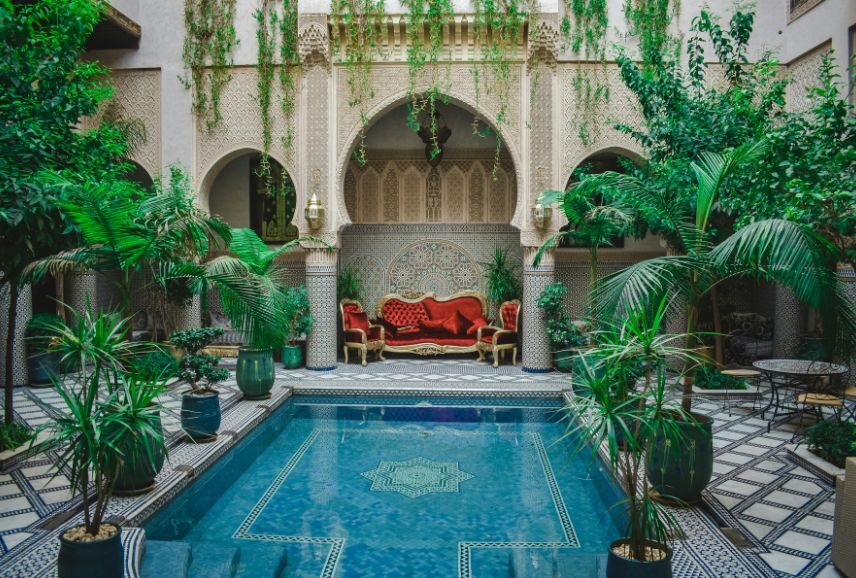
We meet your flight at Fez-Saiss and take you to a riad inside the walls, the last stretch on foot or by handcart because cars do not reach most medina addresses.
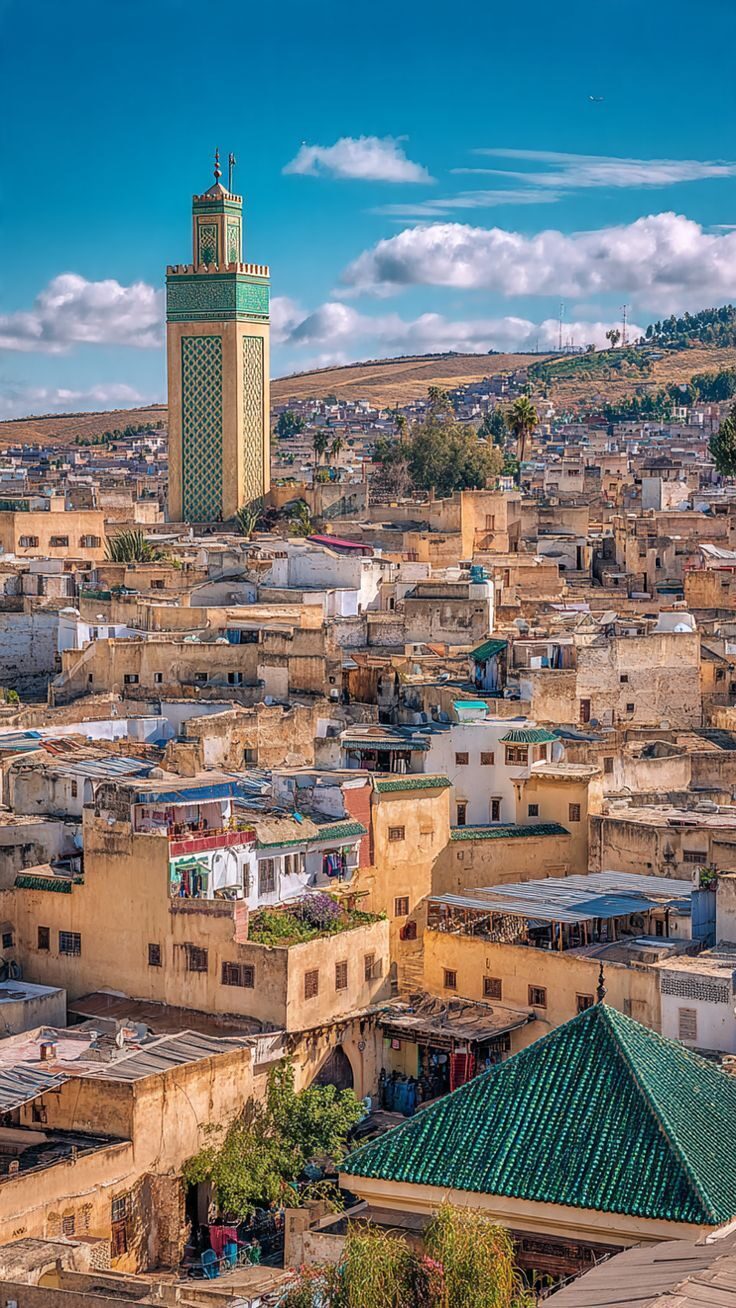
If daylight allows, an hour's walk up to the Merinid tombs for the view down over the whole medina in its bowl with tannery smoke rising off it. Dinner in a courtyard and an early night.
A guided day in the medina
A full day on foot with a guide born inside the walls: roughly nine thousand lanes, no cars, and a plan built for defence rather than for visitors.
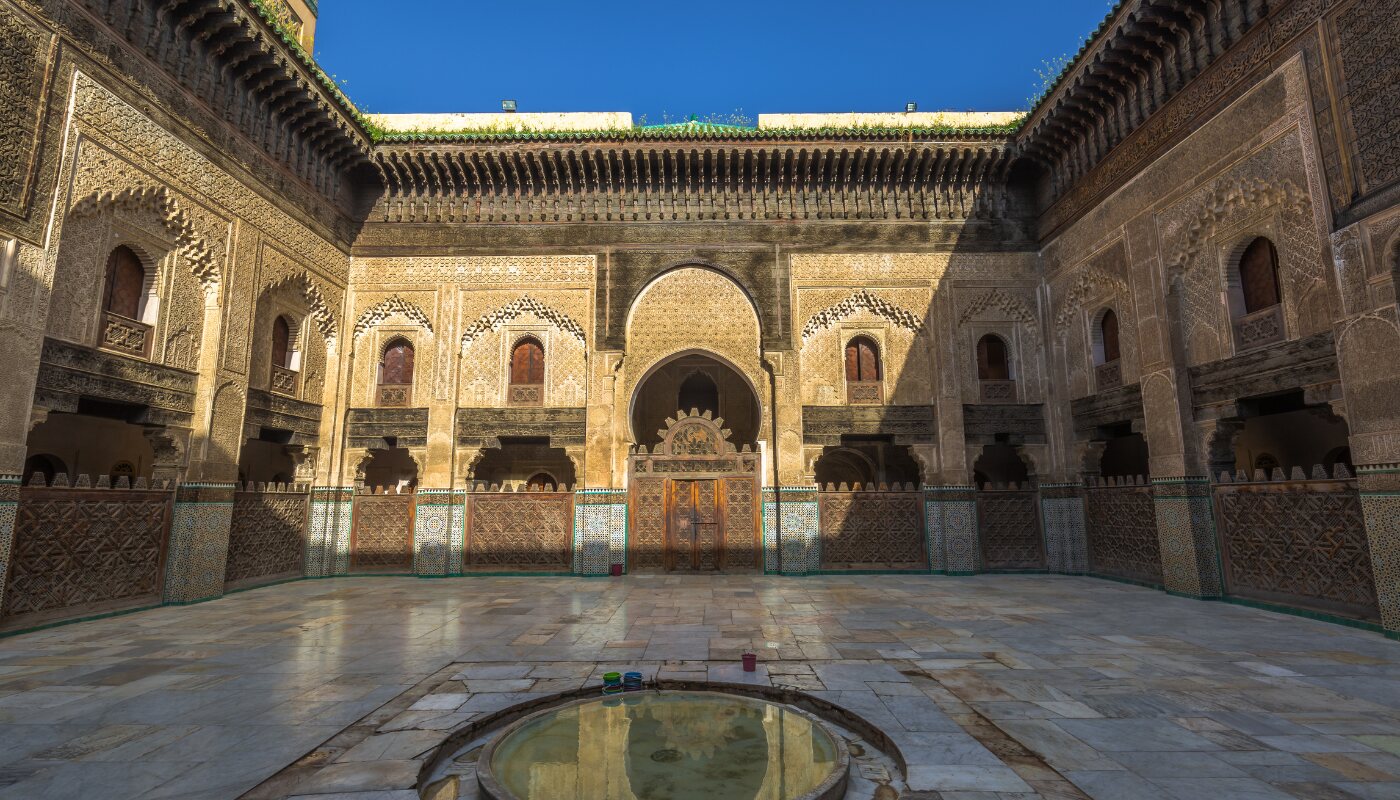
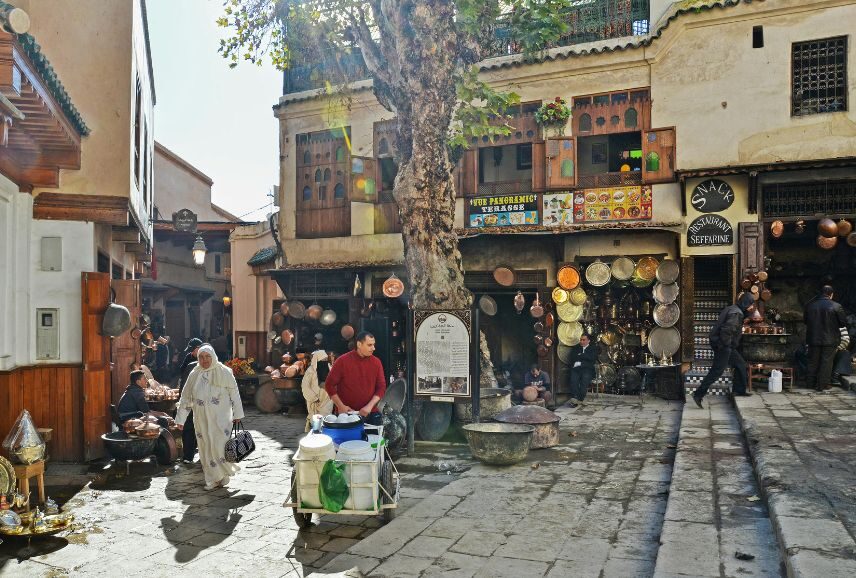
The Al-Qarawiyyin, founded in 859 by Fatima al-Fihri; the Bou Inania and Al-Attarine madrasas for their carved cedar and zellige; the Chouara tanneries from a terrace above the vats; Place Seffarine and its brass beaters; and the mellah in Fez el-Jdid. Lunch in a courtyard, afternoon at your pace.
Fez → the Middle Atlas → Merzouga
South into the Middle Atlas: Ifrane at 1,665 metres, then the cedar forest above Azrou with its Barbary macaques, the only macaque population north of the Sahara, then the high plateau to Midelt for lunch.
The afternoon is the Tizi n'Talghomt, the Ziz gorges carved into red rock above the river, and the palm belt stretching below. At Merzouga you take an overnight bag onto the camels and ride into Erg Chebbi for about ninety minutes, reaching the ridge at sunset. Dinner and drums at camp.
Merzouga, the desert day
Sunrise from the dune above camp, then camels back for breakfast and a hot shower at the auberge before a day that stays in the desert instead of driving out of it.
Khamlia and its Gnawa musicians, with madfouna from an underground oven for lunch; the black hammada; nomad families who still move with the grazing; the old kohl workings; and Dayet Srji, which fills after rain and brings flamingos in spring. Second night at the camp or a kasbah on the edge of the erg.
Merzouga → Rissani → Todra → Dades
Rissani's market on the way out, beside the ruins of Sijilmassa, where the dates are the best in the south. Then west across the stone desert to Tinghir, stacked above a palmery that runs 30 kilometres down the valley.
Todra Gorge takes the afternoon: 300 metres of limestone narrowing to roughly ten, with a cold spring along the floor and climbers on the east wall. We walk the level section. Night in the Dades gorge below the switchbacks at Tissdrine.
Dades → the Valley of Roses → Ouarzazate
A short driving day on purpose. Kelaat M'Gouna and the Valley of Roses first, where Damask roses are picked through May and distilled, then the Skoura oasis and Kasbah Amerhidil among its 30,000 palms.
Ouarzazate by mid-afternoon, which leaves the Taourirt Kasbah at dusk and the Atlas film studios in the morning if studios interest you. The town has stood in for Jerusalem, Tibet and ancient Rome, and the standing sets are worth an hour.
Ouarzazate → Ait Benhaddou → Marrakech
Ait Benhaddou early, before the coaches arrive: UNESCO-listed since 1987, climbing in tiers of packed earth above the Ounila. We cross the riverbed on foot and go up to the granary at the top for the view back down the valley.
Then the old caravan road over the Atlas through Telouet and the ruined Glaoui palace, whose half-collapsed rooms still carry painted ceilings and zellige. The valley road rejoins the Tichka at 2,260 metres and drops into Marrakech for dinner.
Marrakech on foot
A licensed local guide for the morning: the Bahia Palace, the Saadian Tombs that spent two centuries behind a wall, the Koutoubia, and the Ben Youssef Medersa if it is open.
The afternoon is free. Souks around Rahba Kedima are best around four; the Jardin Majorelle and the Yves Saint Laurent museum take two hours and need booking ahead in season. Jemaa el-Fna at dusk as the stalls go up.
Into the Ourika Valley
An hour south of the city the plain stops and the High Atlas begins. The Ourika runs up into it, a green cut of terraced plots, walnut and fig along a river, with Amazigh villages built into the slope on both sides.
We drive to Setti Fatma, where a walking path climbs past a chain of seven waterfalls, and take as much of it as suits your group; the first fall is twenty minutes over rock and the rest is a proper scramble. On the way back there is an aromatic garden at Tnine and a small Berber ecomuseum at Tafza in a restored kasbah. Back in Marrakech for dinner.
Marrakech → Essaouira
West through the argan belt, endemic to this corner of the country, with women's cooperatives along the road pressing the oil by hand. We will say plainly when a roadside group of goats in a tree has been arranged for the cameras.
Essaouira is about three hours on and the temperature drops the moment you reach the coast. The medina was laid out on a grid in the 1760s by a French engineer, unlike any other in Morocco, and has been UNESCO-listed since 2001. Walk the Skala de la Ville and its brass cannons as the light goes.
A day on the coast
No driving. The port in the morning, where blue wooden sardine boats are still built and repaired by hand and the catch is grilled on the quay at lunchtime, and the thuya woodworkers in the arcades under the ramparts.
Afternoons here are for the long beach running south towards Diabat, with horses and camels on the sand and the half-buried ruin of Borj el-Berod at the far end, or for doing nothing at all. The trade winds mean a windbreaker is useful even in August.
Essaouira → El Jadida → Casablanca
North up the Atlantic. Safi's potters' hill first, where the kilns have been firing for centuries, then Oualidia's lagoon for lunch and oysters if you eat them.
El Jadida was Portuguese Mazagan from 1502 until 1769 and the walled town they left is UNESCO-listed. Its underground cistern holds a film of water that mirrors the vaults and the single shaft of light, which is why Orson Welles filmed part of Othello in it. Casablanca for the night.
Casablanca and the flight home
The Hassan II Mosque in the morning on a guided visit: finished in 1993, minaret 210 metres and the tallest in the world, prayer hall built partly out over the Atlantic with a roof that opens. One of very few working mosques in Morocco that non-Muslims may enter.
Then the Habous quarter for its bakeries and book stalls, and the corniche if there is time. Transfer to Mohammed V airport whenever your flight needs. Most long-haul departures leave from here, which is why the circuit finishes in Casablanca rather than doubling back to Fez.
Inclusions & exclusions
✓ Included
- Private air-conditioned vehicle & driver
- Accommodation in riads, hotels & desert camp
- Breakfasts and dinners as per itinerary
- Camel trek and a night under the stars
- Pickup and drop-off at hotel or airport
✕ Not included
- Lunches and extra drinks
- Monument and museum entrance fees
- Licensed city guides where requested
- Tips and personal expenses
A glimpse of the road
Along the way
Highlights
- Fez el-Bali and the tanneries
- Erg Chebbi and the black desert
- Ait Benhaddou and Telouet
- Ourika Valley and Setti Fatma
- Essaouira and the Hassan II Mosque
Comfort
- No marathon driving days
- Hand-picked riads along the route
- Stops whenever you ask for one
- Child seats and slower pacing on request