The experience
Almost every long Morocco circuit turns north at Ouarzazate. This one keeps going. After Fez and Erg Chebbi we cross the Jebel Saghro to the Draa Valley and Zagora, come back through Ouarzazate and over the old Telouet road to Marrakech, then drop south over the Tizi n'Test to Taroudant, the Souss and the Atlantic at Taghazout before working north to Essaouira and home. It is the version for people who have either seen the standard loop already or want the parts of Morocco that most itineraries skip.
- Draa Valley, Zagora and Tamegroute
- Jebel Saghro crossing through Nkob
- Telouet kasbah and the old pass road
- Taroudant ramparts and the Souss plain
- Paradise Valley and the Atlantic at Taghazout
Full itinerary, day by day
Arrive Casablanca
We collect you at Mohammed V and give the first day to Casablanca itself: the Hassan II Mosque over the water, the art deco core around Place Mohammed V, and the Habous quarter, which was built as a planned medina in the 1920s and has the best booksellers and the best pastry in the city.
Dinner on the Corniche at Ain Diab. Nothing strenuous — the thirteen days ahead have some long ones in them and the first evening is for getting over the flight.
Casablanca → Rabat → Meknes → Fez
Rabat in the morning: the Kasbah of the Udayas, the Hassan Tower and its field of broken columns, and Chellah with its Roman ruins, Merinid tombs and storks.
Inland in the afternoon to Meknes for Bab Mansour, the Heri es-Souani granaries and the great Agdal basin, and then the last hour into Fez. We stay inside the medina walls.
Fez, guided day
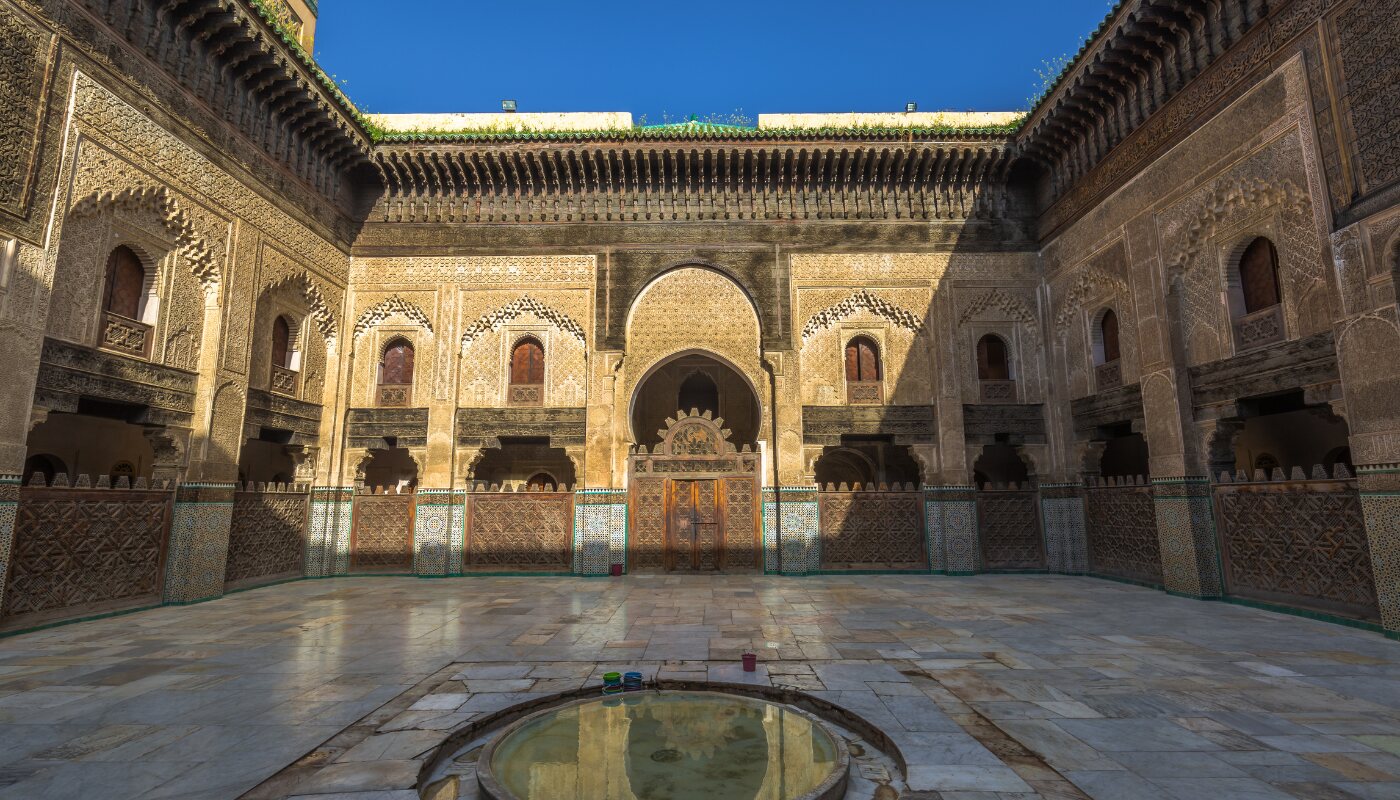
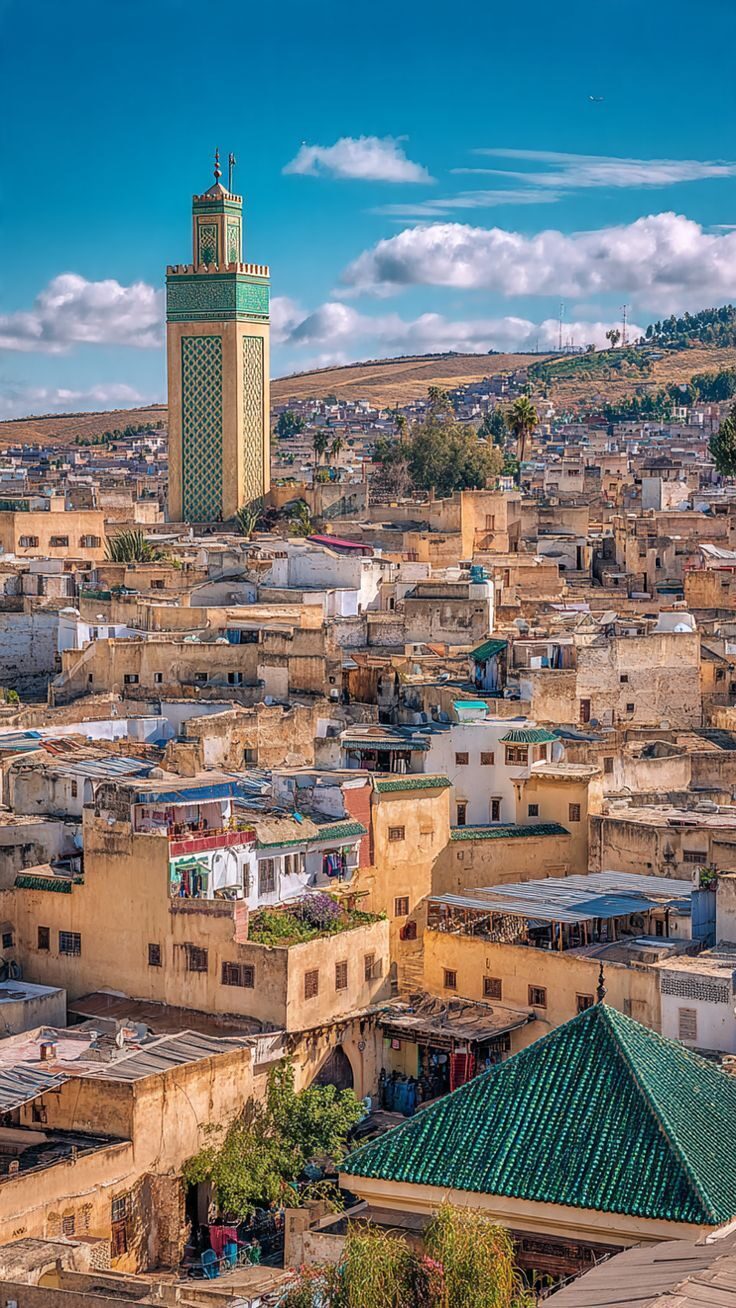
A full day on foot in Fez el-Bali with a licensed guide. Bab Boujloud, the Bou Inania madrasa and its water clock, the Attarine madrasa, Al-Qarawiyyin and the oldest continuously operating library in the world, and the Nejjarine fondouk.
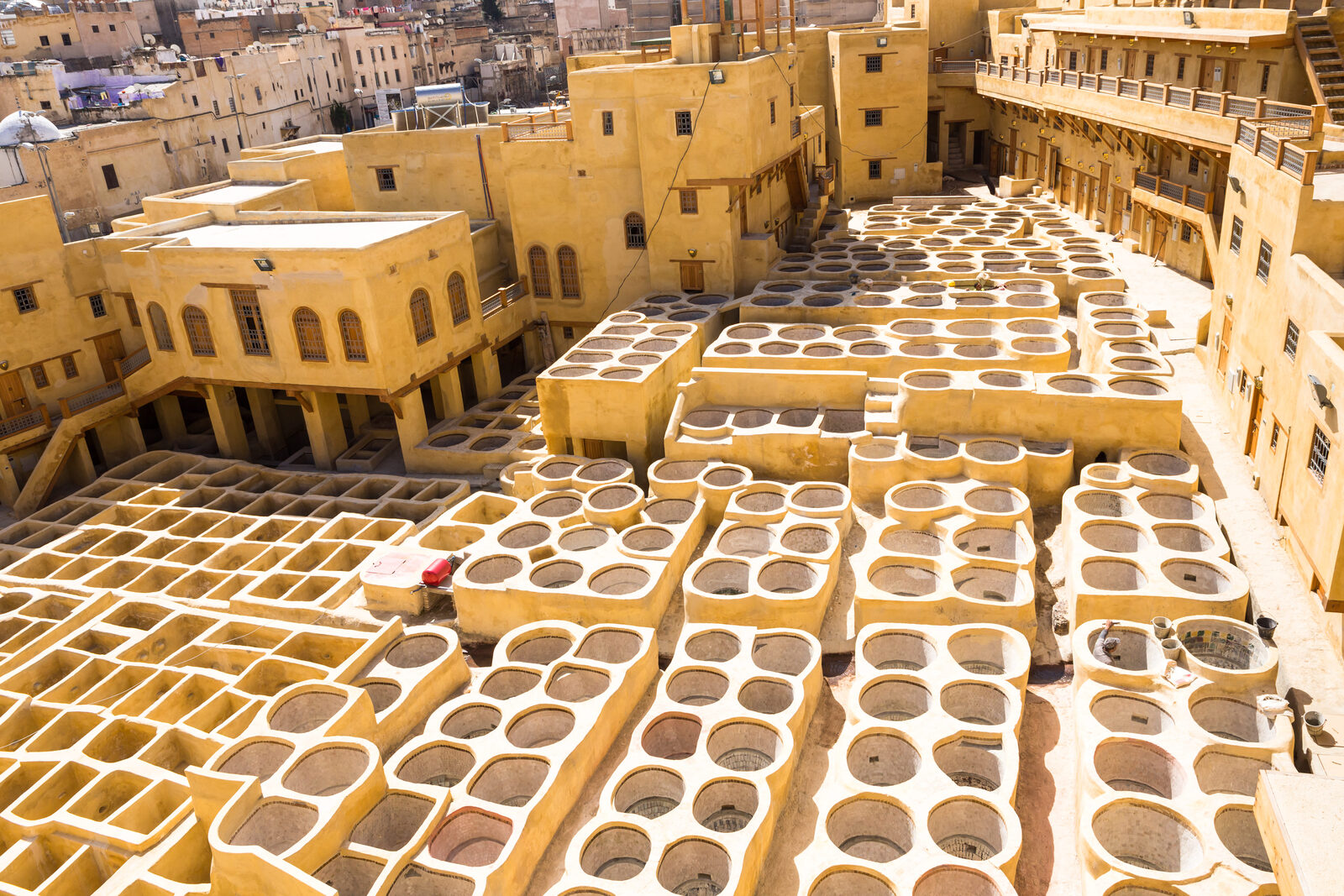
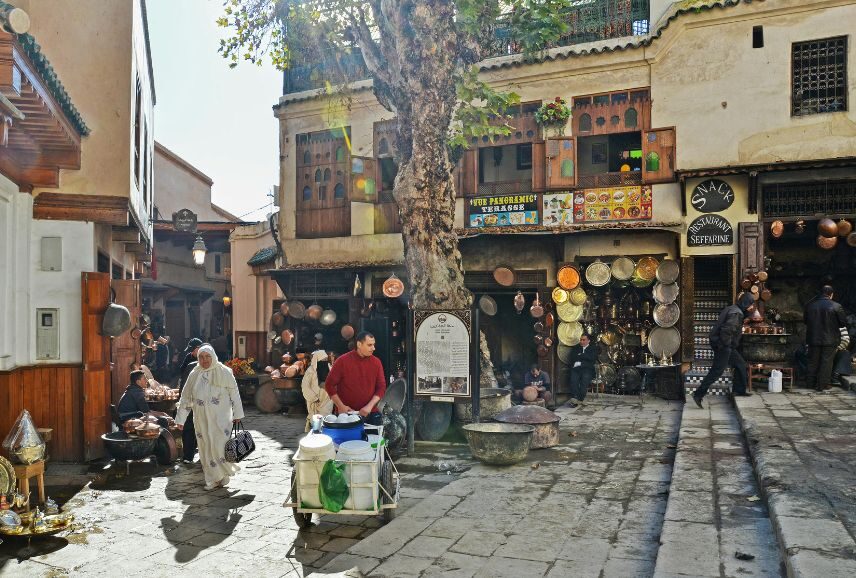
The afternoon goes to the working medina: Chouara tanneries, the brass square at Seffarine, the weavers' lanes and the zellij workshops beyond Bab Ftouh, finishing on the ridge at the Merinid tombs for the sunset view over nine thousand streets.
Fez → Ifrane → Midelt → Ziz → Merzouga
The long drive south, which is one of the great road days in Morocco. Ifrane at 1,665 metres, the Azrou cedar stand with its Barbary macaques, the high plateau under the Jebel Ayachi, and the Tizi n'Talghemt.
On the far side everything changes: red rock, date palms, fortified villages of packed earth. The Ziz Valley, the Erfoud fossil workshops, and Merzouga in the late afternoon. Camels into Erg Chebbi for sunset and a night at camp among the dunes.
Merzouga, full day in the desert
Sunrise over the erg, camels back for breakfast, and then the desert at walking pace. Khamlia and its Gnawa musicians, nomad families on the hammada, and madfouna cooked under the sand for lunch.
In the afternoon, the fossil beds and the black desert east towards the Algerian frontier, Dayet Srji if there is water in it, and a second night either at the camp or in a kasbah on the edge of the sand. Having two nights here means the sunrise is not also a departure.
Merzouga → Rissani → Nkob → Agdz → Zagora
This is where the circuit leaves the usual road. West from Rissani on the Alnif route, across the southern flank of the Jebel Saghro, which is volcanic, black and almost unpopulated, with table mountains standing off the plain.
Nkob has more kasbahs in sight at once than anywhere else in Morocco — over forty of them — and we stop there before the Tizi n'Tinififft brings us down into the Draa at Agdz. The Draa is the longest river in the country and its valley is an unbroken palmery for a hundred and fifty kilometres. Night in Zagora.
Zagora → Tamegroute → Tinfou → Ouarzazate
Tamegroute in the morning, twenty minutes down the valley: a zaouia whose library holds Koranic manuscripts on gazelle parchment going back to the eleventh century, and a potters' quarter where the glaze is a distinctive green made from local copper and fired in underground kilns.
The Tinfou dunes are a little further on — small, isolated, nothing like Erg Chebbi, but they are the ones the old Timbuktu caravans actually passed. Then back up the Draa through Agdz and the Tizi n'Tinififft to Ouarzazate for the night.
Ouarzazate → Ait Benhaddou → Telouet → Marrakech
The Taourirt kasbah first thing, then Ait Benhaddou, where we cross the Ounila and climb through the ksar to the granary on the summit for the view back down the valley.
Instead of the main pass we take the old Ounila road to Telouet, the kasbah of the Glaoui, who ran the south from here until 1956 — half of it is collapsing and the other half has painted cedar ceilings and zellij as fine as anything in Fez. The track rejoins the Tichka road and we come down into Marrakech in the evening.
Marrakech, guided day
A licensed guide and a day in the medina: the Koutoubia, the Bahia Palace, the Saadian Tombs, the Mellah and spice square, and the souks walked trade by trade. Lunch on a terrace above the tanners' quarter.
The afternoon is free. The Majorelle garden and the Yves Saint Laurent museum are the obvious pair; the Dar Si Said woodwork museum and the Maison de la Photographie are the better ones if you dislike queues. Dinner on a roof above Jemaa el Fna.
Marrakech → Tizi n'Test → Taroudant
South out of the Haouz plain and up the Tizi n'Test, the older and narrower of the two High Atlas passes, built by the French in the 1920s on a mule track. We stop at Tin Mal, the twelfth-century Almohad mosque standing alone in the valley, one of only a handful in Morocco that non-Muslims may enter.
The pass tops out at 2,100 metres and the view south opens over the whole Souss plain to the Anti-Atlas. Down into Taroudant, which is walled in red earth for seven kilometres and is often called a small Marrakech, except that it is quiet and nobody is selling you anything. Night inside the walls.
Taroudant → Tiout → Taghazout
A morning on the Taroudant ramparts and in its two souks, the Arab and the Berber, which sell to the town rather than to visitors. Then out to the Tiout palmery, where the oasis runs below a hilltop kasbah and you can walk or ride through the irrigation channels.
West across the Souss, which is the citrus and argan belt of Morocco, to the Atlantic. Taghazout is a fishing village that became a surf town and kept its scale; the coast north of it is a run of headlands and empty beaches. Night by the sea.
Taghazout → Paradise Valley → Essaouira
Paradise Valley in the morning, half an hour inland — a gorge in the argan hills with pools in the rock and palm trees in the bottom of it, best between late winter and early summer when the water is running.
Then the coast road north. It is slow and good: argan trees with goats in them, headlands, the odd marabout tomb on a cliff. Essaouira in the late afternoon, where we stay inside the ramparts so the evening is on foot.
Essaouira → El Jadida → Casablanca
A last Essaouira morning: the blue boats coming in, the fish auction on the quay, the Skala de la Ville with its Spanish cannon, and the thuya woodworkers in the arcades under the walls.
North after lunch through Oualidia and El Jadida, where the Portuguese cistern doubles its columns in a film of water on the floor, and into Casablanca in the evening. Drop-off at your hotel or at Mohammed V airport.
Inclusions & exclusions
✓ Included
- Private air-conditioned vehicle & driver
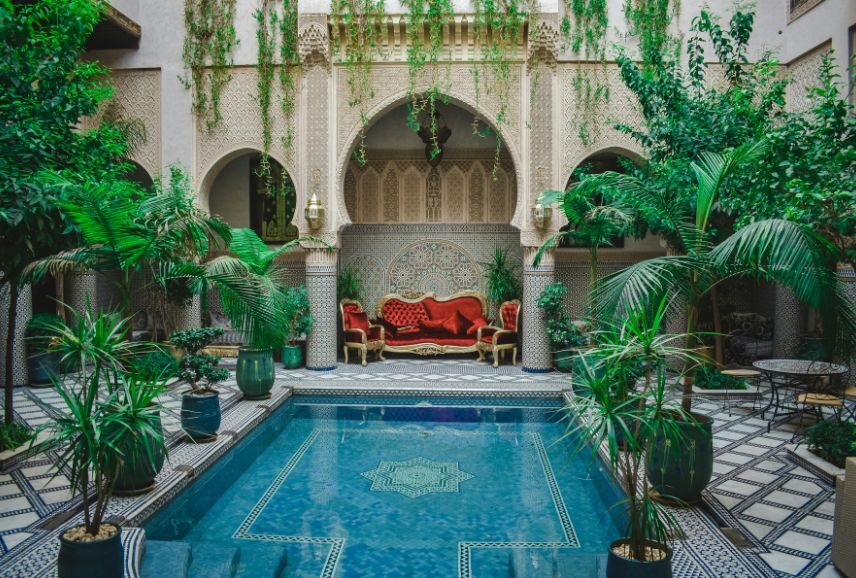
- Accommodation in riads, hotels & desert camp
- Breakfasts and dinners as per itinerary
- Camel trek and a night under the stars
- Pickup and drop-off at hotel or airport
✕ Not included
- Lunches and extra drinks
- Monument and museum entrance fees
- Licensed city guides where requested
- Tips and personal expenses
A glimpse of the road
Along the way
Highlights
- Erg Chebbi dunes
- Tamegroute library and pottery
- Telouet and Ait Benhaddou
- Taroudant walls
- Essaouira ramparts
Comfort
- No marathon driving days
- Hand-picked riads along the route
- Stops whenever you ask for one
- Child seats and slower pacing on request